I used to think finding a restaurant was simple.
You pick a place.
You check the menu.
You make a reservation.
Done.
But the more we explored food safety and dietary restrictions, the more we realized how quickly things become complicated once multiple restrictions enter the picture.
If you want the broader category view, start with Allergies and Food Restrictions We Help People Navigate. That page links out to the strongest need-specific guides and explains why restaurant context matters beyond a simple menu label.
One Restriction Is Hard Enough
Dining out with one food allergy can already feel stressful.
You ask questions.
You double-check ingredients.
You hope the kitchen understands the seriousness of the request.
That alone can be exhausting.
But for many people, the challenge does not stop at a single restriction.
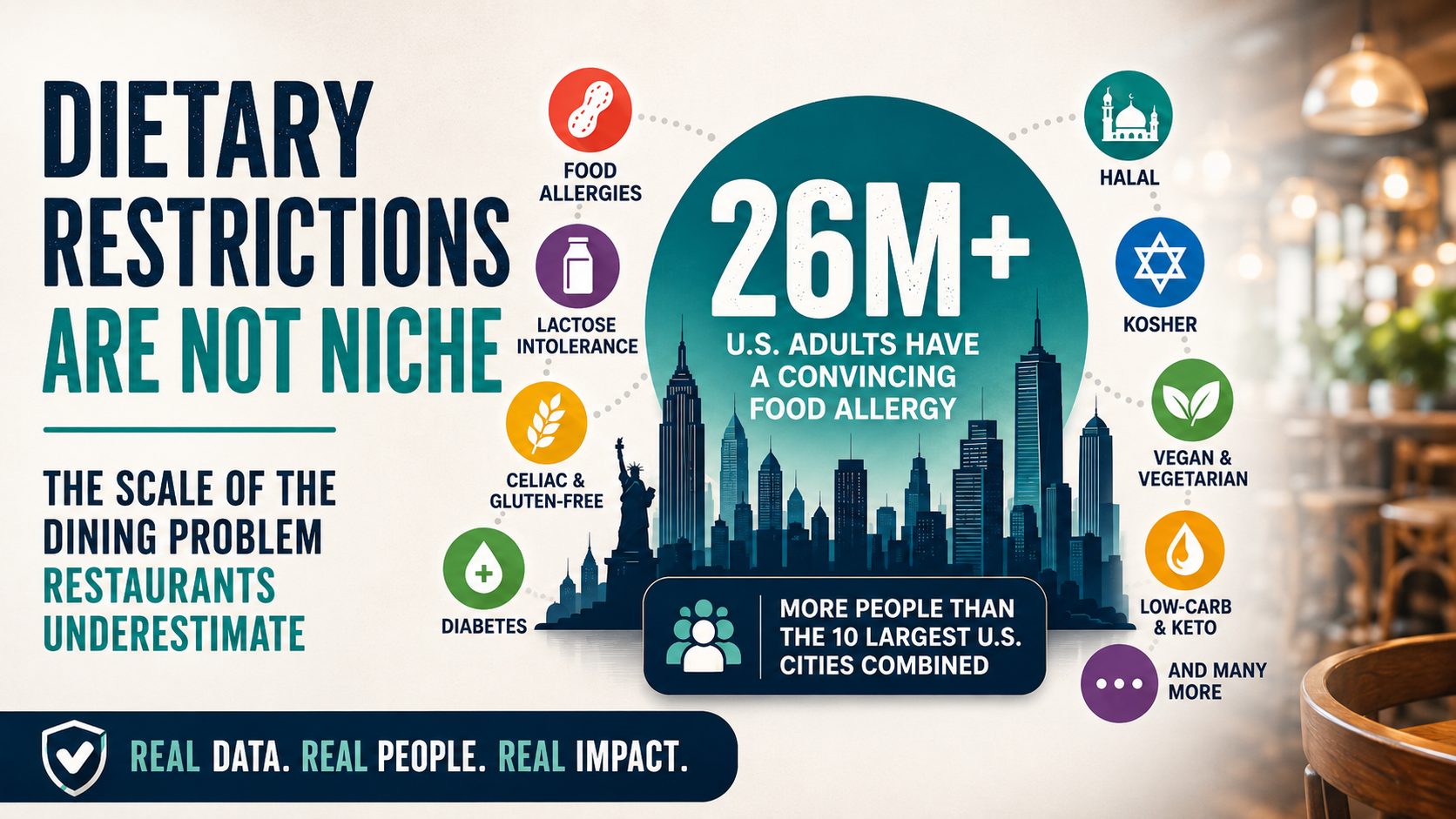
The FDA says food allergies and other food hypersensitivities affect millions of Americans and their families, which helps explain why better restaurant context matters so much for diners trying to make decisions before they arrive.
Source: FDA, Food Allergies
When Restrictions Start Overlapping
One restriction is manageable.
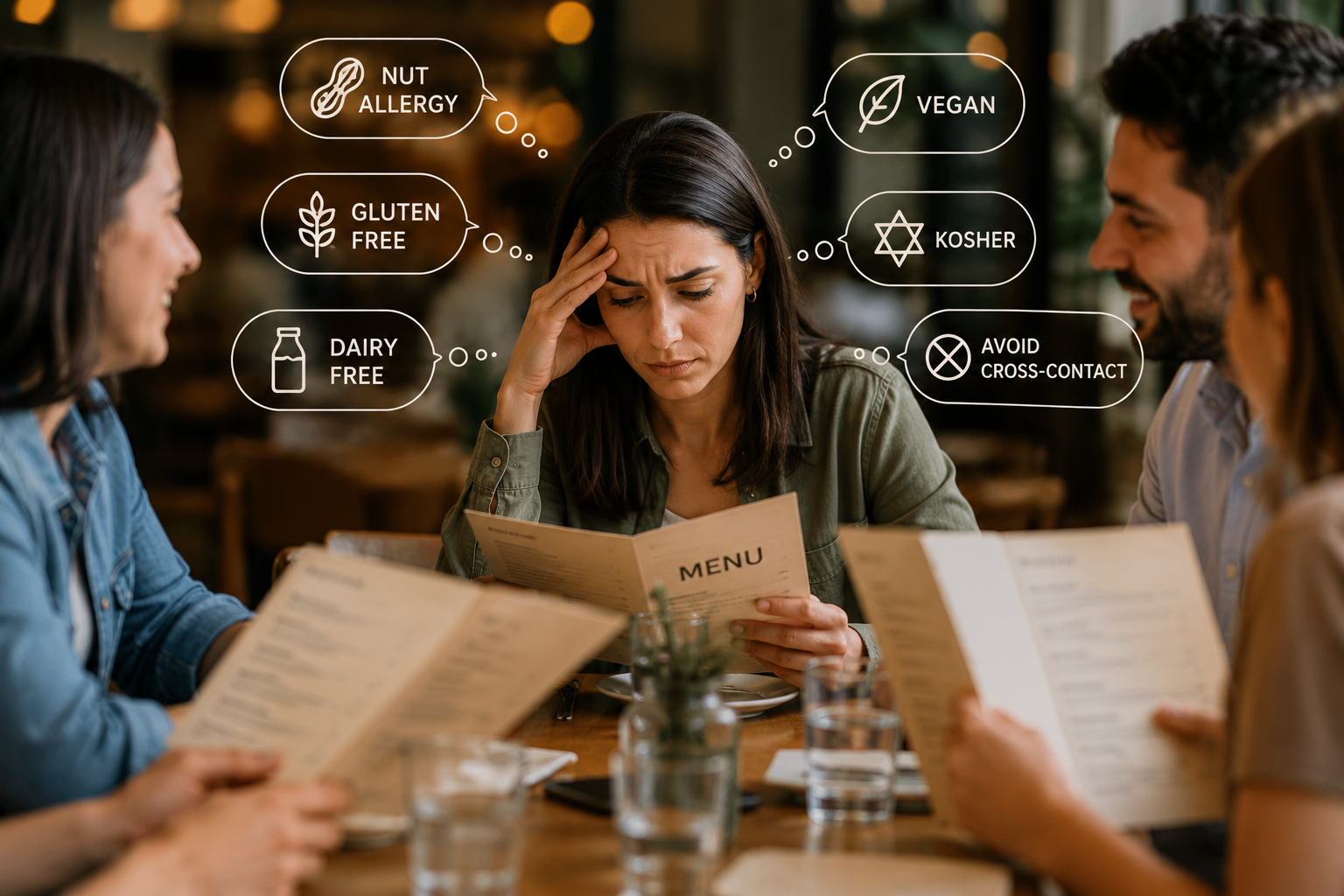
But once multiple allergies, dietary restrictions, and food requirements start overlapping, even choosing a restaurant can become exhausting.
You finally find a vegan-friendly restaurant.
Then you realize peanuts are used heavily throughout the kitchen.
So you start over.
You find a place that understands allergies.
But they cannot accommodate kosher preparation.
Another restaurant offers halal options, but cross-contact procedures are unclear.
Every additional restriction adds another layer of uncertainty.
And most restaurant discovery tools are not built for that kind of complexity.
In some cases, important sourcing information is not clearly listed anywhere online at all. We explored that further in Why Finding Jhatka Restaurants Online Is Harder Than It Should Be.
Why One Restaurant Filter Usually Is Not Enough
Most apps and restaurant websites rely on simple filters.
Vegan.
Gluten-free.
Nut-free.
Halal.
Kosher.
But real dining situations are rarely that simple.
A restaurant might offer vegan options while still using peanuts, tree nuts, sesame, soy, or legumes heavily throughout the kitchen.
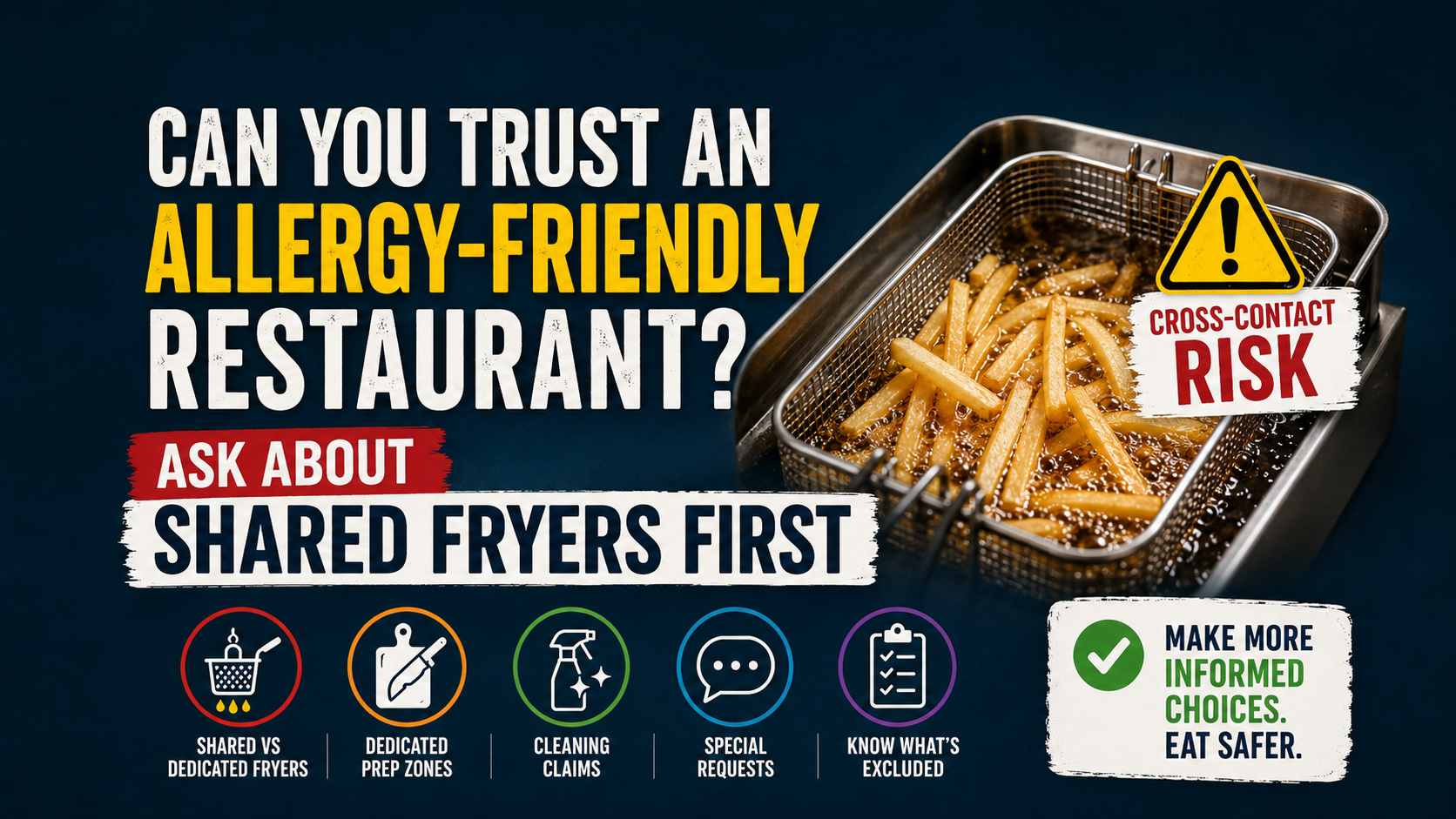
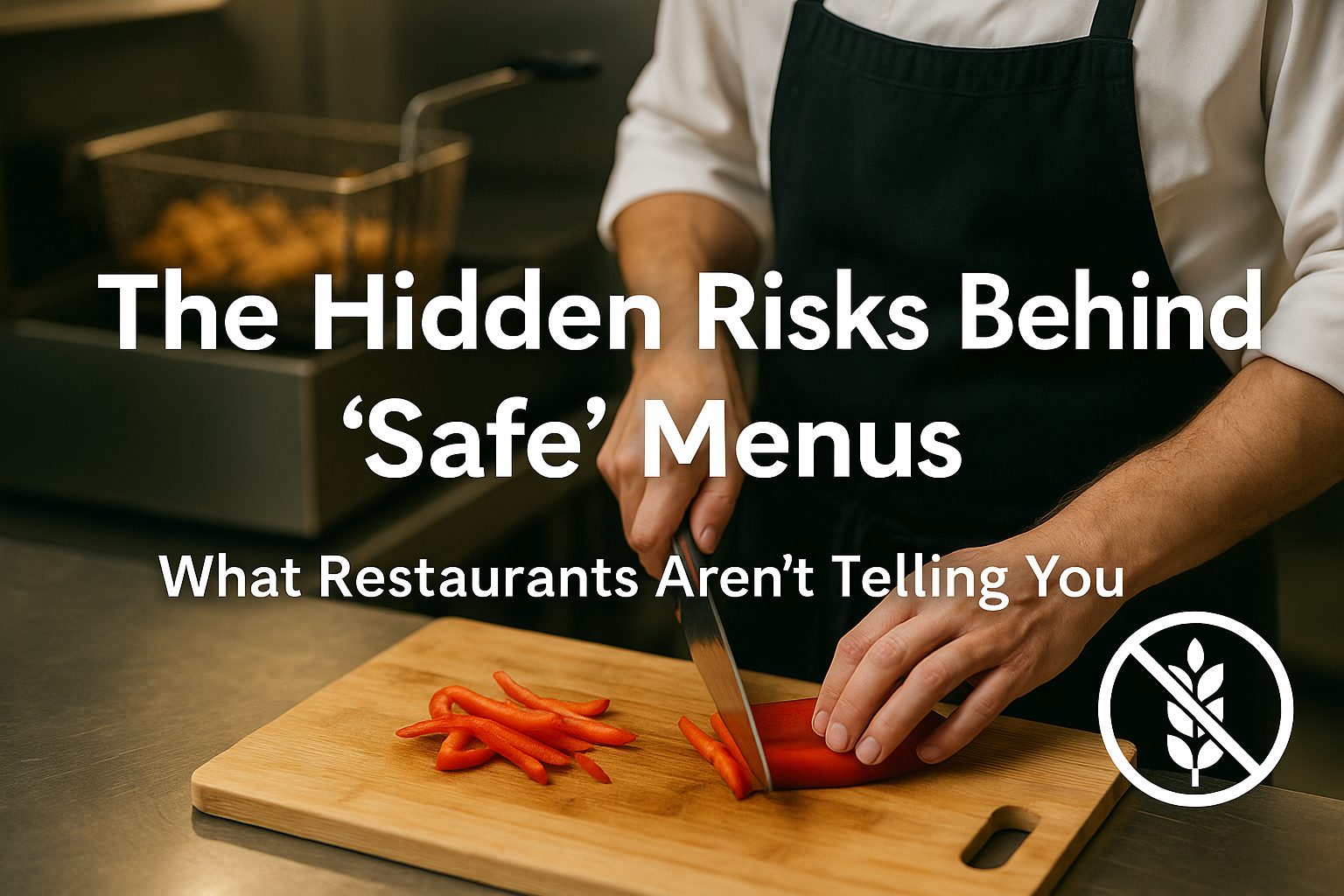
A menu might label dishes as gluten-free without explaining shared fryers, flour exposure, prep surfaces, or whether the kitchen can support celiac-sensitive orders.
A restaurant might offer halal meat while still using sauces, marinades, desserts, or shared equipment that create other concerns.
Some places genuinely want to accommodate restrictions, but the information available online often lacks the detail people actually need to feel confident.
As a result, diners end up doing the research themselves.
Reading menus.
Scanning reviews.
Calling restaurants.
Cross-checking ingredients.
Trying to interpret vague answers.
What should feel spontaneous starts feeling strategic.
How to Search More Carefully
When you have multiple dietary restrictions, it helps to search in layers instead of relying on one label.
Start with the restriction that is hardest to compromise on.
Then check preparation details, not just the menu category.
For example:
- if you need gluten-free and celiac-sensitive options, ask about shared fryers, flour exposure, and prep surfaces
- if you need vegan food and have a nut allergy, check whether nuts, sesame, soy, or legumes are heavily used
- if you need halal food and have an allergy, check meat sourcing separately from sauces, marinades, dairy, nuts, and cross-contact
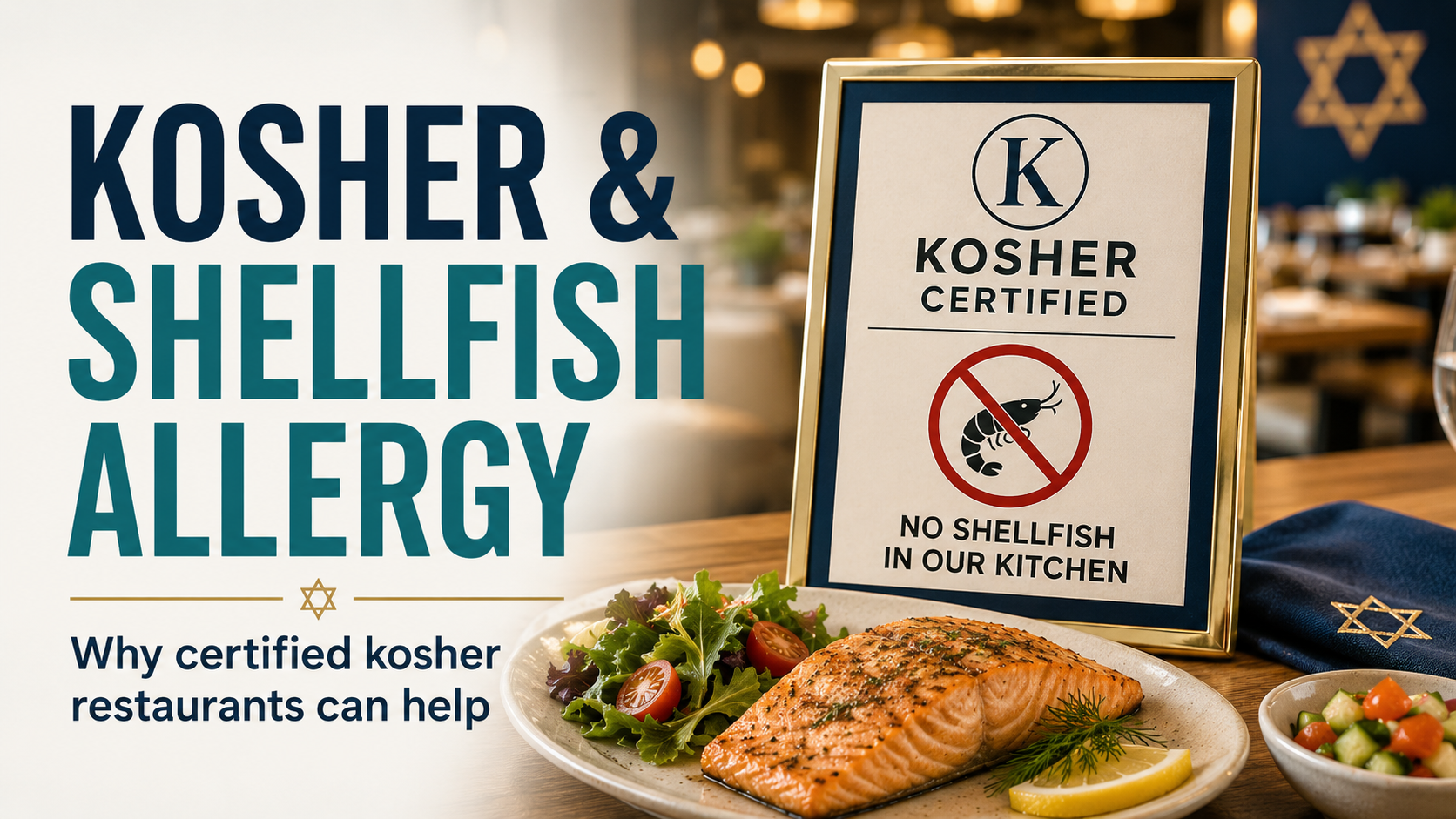
- if you need kosher food and have a shellfish allergy, confirm whether the restaurant is certified kosher and whether it serves fish
- if you need dairy-free food, distinguish between lactose intolerance, dairy allergy, and dishes that can only be modified by removing cheese or cream
- if you need sesame-free food, check oils, buns, dressings, spice mixes, toppings, and finishing ingredients
The goal is not to find a perfect label.
The goal is to understand whether the restaurant can actually support the combination of needs that matters to you.
Examples of Overlapping Dietary Needs
Multiple dietary restrictions are difficult because each label answers only part of the question.
For example:
- Vegan + peanut allergy: a vegan restaurant may still use peanuts, tree nuts, sesame, soy, or legumes heavily.
- Gluten-free + celiac: a gluten-free label may not explain shared fryers, flour exposure, or prep surfaces.
- Halal + food allergy: halal meat sourcing does not answer questions about nuts, dairy, sesame, sauces, marinades, or cross-contact.
- Kosher + shellfish allergy: certified kosher restaurants can reduce shellfish exposure, but kosher certification is not allergy certification.
- Dairy-free + lactose intolerance: avoiding lactose is not always the same as managing a dairy allergy.
- Vegetarian + egg allergy: vegetarian dishes may still rely on egg in batters, sauces, fresh pasta, or baked items.
That is why one filter often fails.
People do not only need a label.
They need to know what that label actually covers.
The Stress of Cross-Checking Everything
For many people, dining out is not just about finding food they like.
It is about finding somewhere that feels safe enough to trust.
And when multiple restrictions overlap, uncertainty grows quickly.
You stop asking:
“What do I want to eat?”
And start asking:
“What feels safest?”
“What carries the least risk?”
“What can realistically accommodate everyone?”
That mental calculation follows people into birthdays, dinners, work events, and nights out with friends.
Most people never see that part.
And the stakes are not always casual.
The Celiac Disease Foundation describes celiac disease as a serious autoimmune disease triggered by gluten. That is one reason a generic gluten-free label can be too weak when someone is trying to judge whether a place is a realistic fit.
Source: Celiac Disease Foundation, What is Celiac Disease?
When Dining Out Stops Feeling Spontaneous
Over time, many diners stop trying new places altogether.
They stick to the same trusted restaurants.
They simplify their orders.
They avoid situations where uncertainty feels too high.
Not because they want fewer choices.
But because constantly researching every meal becomes exhausting.
Dining out should feel social, enjoyable, and spontaneous.
Not like detective work.
People Deserve Better Than Guesswork
The problem is not that restaurants do not care.
Most genuinely want to accommodate diners safely.
The problem is that important food information is often fragmented, inconsistent, or difficult to verify before someone even walks through the door.
And when people are managing multiple restrictions at once, that uncertainty adds up quickly.
People deserve better than crossed fingers.
Better than vague menu labels.
Better than hoping the staff understood the request correctly.
Because food brings people together.
And nobody should feel excluded from that experience simply because finding the right restaurant became too complicated.
For many people, that uncertainty starts long before they sit down at the table, a feeling we explored further in Dining Out With Food Allergies Shouldn’t Be a Gamble.
If you are trying to turn that uncertainty into a clearer search, start with our allergy and food restriction guide hub, then move into the most relevant guide for your need. You can also read how Simpa handles restaurant and community data.