An allergy-friendly label can be helpful.
But it is not enough by itself.
A restaurant can say gluten-free.
A dish can look dairy-free.
A menu can claim nut-free.
A server can say, “We clean often.”
All of those signals sound reassuring. But for diners with food allergies, celiac disease, intolerances, or serious dietary restrictions, the real question is more specific:
What is actually excluded, and what happens to the food before it reaches the table?
That is where restaurant transparency gets serious.
A dish may avoid an ingredient but still be cooked in a shared fryer.
A prep area may be called “dedicated,” but not explain whether it excludes gluten, peanuts, tree nuts, dairy, shellfish, sesame, or something else.
A kitchen may clean regularly but still use shared tongs, shared scoops, shared containers, or shared equipment during service.
A restaurant may accept special requests, but the request only matters if it changes the actual kitchen process.
Ingredient information tells diners what is supposed to be in the dish.
Preparation information tells diners what might happen to the dish before it reaches the table.
For many diners, both matter.
Ingredient Labels Are Only the First Step
Ingredient labels help diners understand whether a dish includes wheat, milk, egg, peanuts, tree nuts, sesame, soy, fish, shellfish, or another ingredient they avoid.
That information matters.
But ingredient labels do not explain the full path of the food.
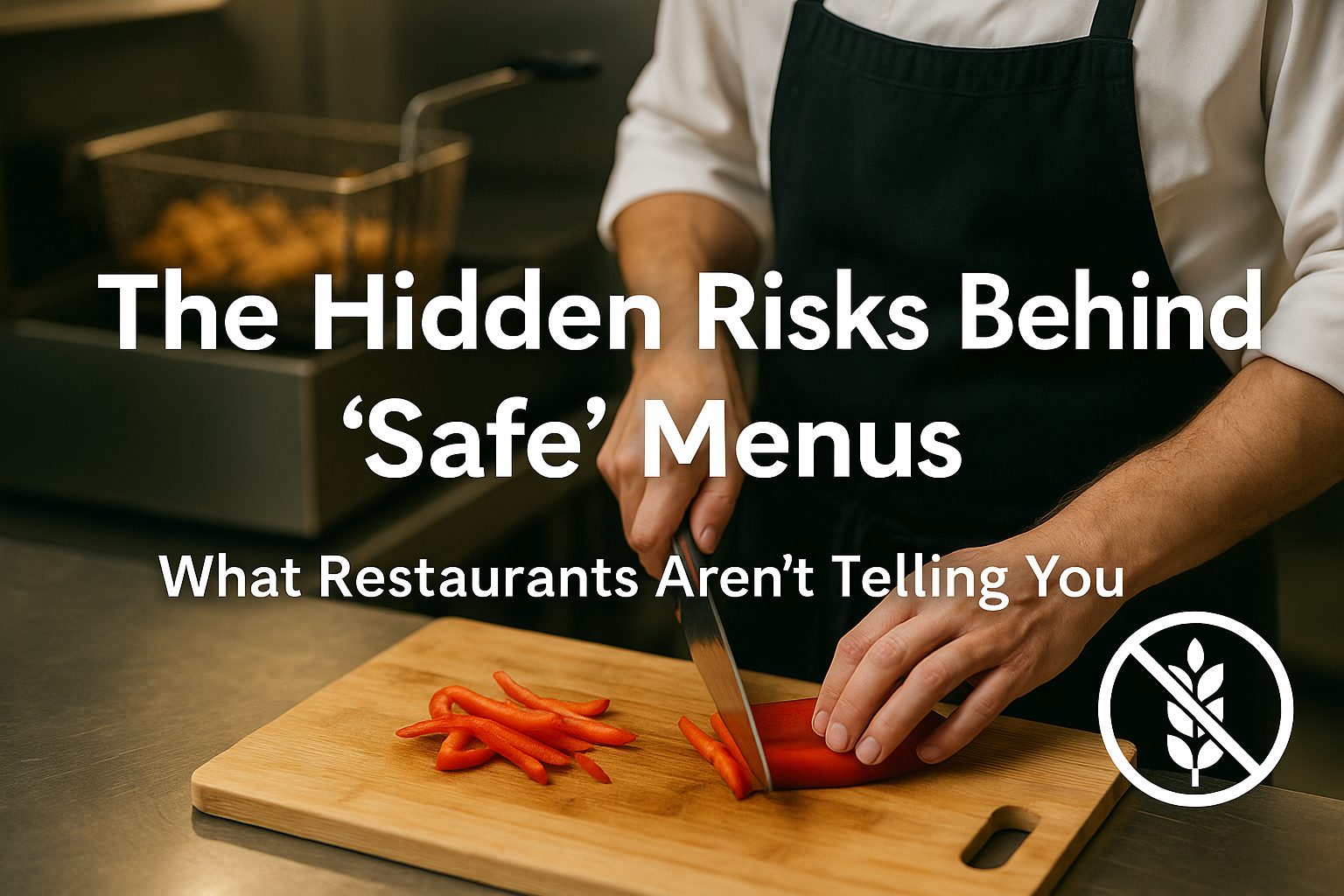
French fries may not contain gluten ingredients, but they may be cooked in the same fryer as breaded chicken or onion rings.
A salad may not list tree nuts, but it may be assembled beside walnut, almond, or pecan toppings.
A dairy-free dish may be finished with utensils that were just used for cheese, butter, or cream.
A gluten-free bun may be toasted on shared equipment.
A nut-free dessert may sit beside nut-containing items in a shared bakery case.
That does not mean every restaurant is unsafe.
It means a menu label can only answer part of the decision.
The next layer is preparation.
Shared Fryers Are One of the Clearest Examples
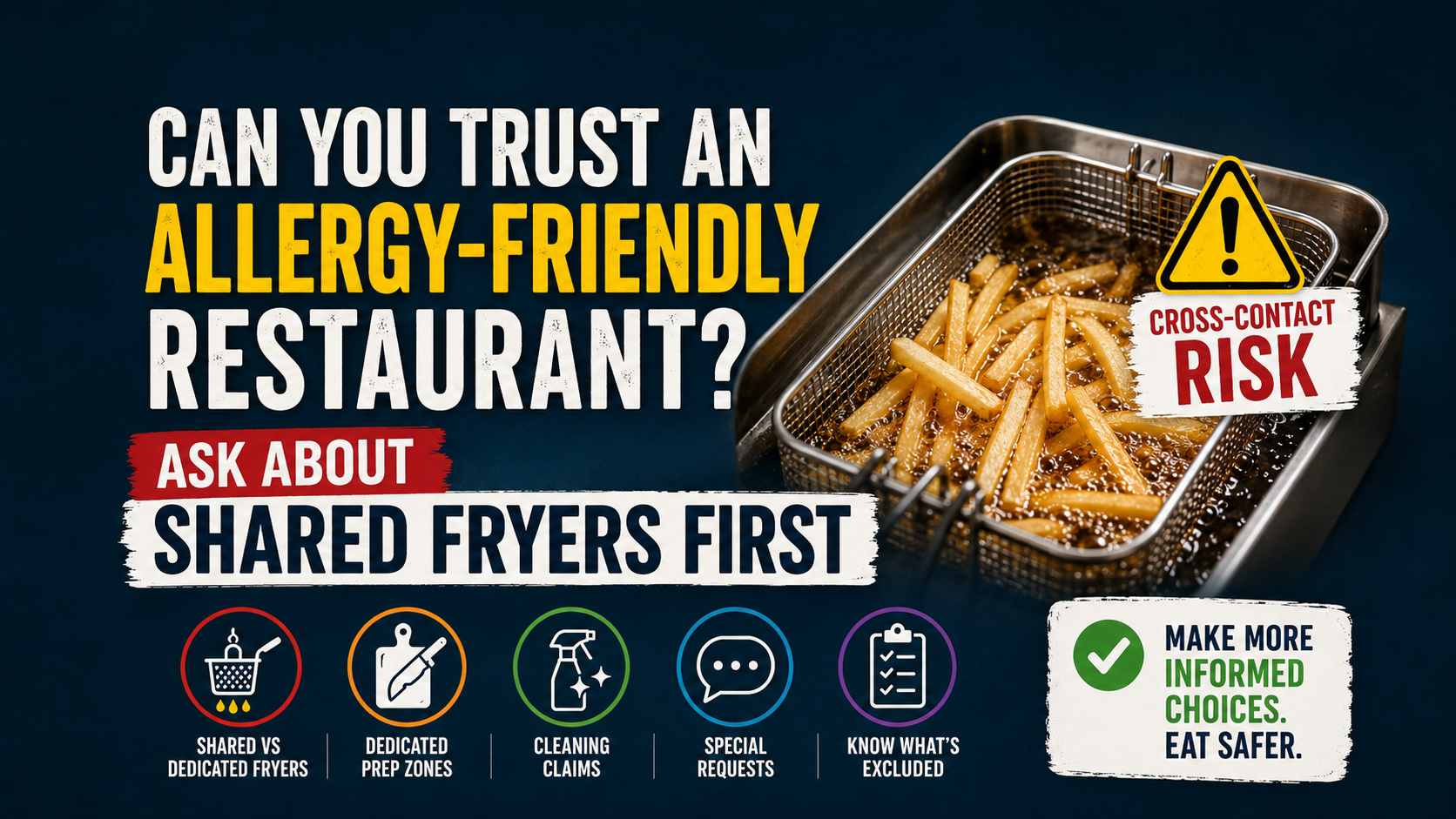
Shared fryers are one of the easiest ways to understand why preparation matters.
A fryer does not reset between orders just because the next item has a different label.
If breaded chicken, onion rings, fish, shellfish, or other allergen-containing foods are cooked in the same oil, that fryer may create cross-contact concerns for diners avoiding wheat, gluten, fish, shellfish, egg, milk, or other ingredients used in batters and coatings.
This is especially important for gluten-free and celiac-related dining.
A menu might describe fries as gluten-free because the fries themselves do not contain gluten ingredients. But if those fries are cooked in a shared fryer with wheat-containing foods, the label may not be enough for someone with celiac disease or a high sensitivity to gluten exposure.
That is why gluten-free fries can be an incomplete claim.
A more useful restaurant explanation is specific:
The fries do not contain gluten ingredients, but they are cooked in a shared fryer.
Or:
The fries are cooked in a dedicated fryer that is not used for breaded items.
Those two statements are very different.
One describes the ingredient profile.
The other describes the preparation process.
Dedicated Prep Only Matters If the Scope Is Clear
Separate prep can be helpful.
Dedicated prep zones can be helpful.
But only when the restaurant explains what they are dedicated away from.
A restaurant saying “we use a dedicated prep area” sounds useful, but it is incomplete unless diners know which ingredients are excluded from that area.
A dedicated gluten-free prep space does not automatically mean dairy-free.
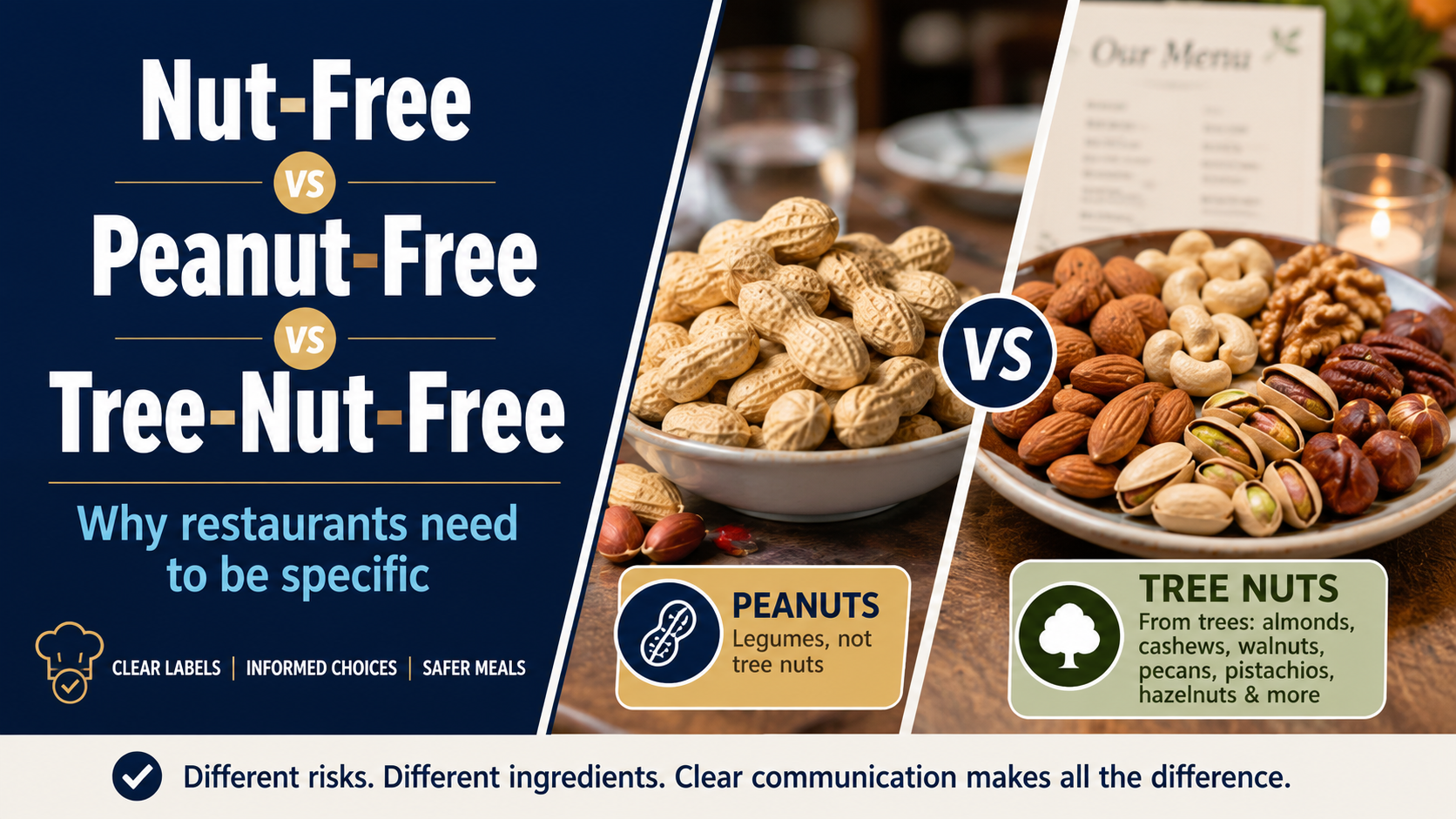
A peanut-free prep space does not automatically mean tree-nut-free.
A nut-free area may still need clarification around peanuts, tree nuts, sesame, coconut, or other ingredients depending on how the restaurant uses the word “nut.”
A vegan prep area does not automatically answer questions about gluten, nuts, soy, sesame, or allergen cross-contact.
A kosher or halal preparation claim does not automatically answer questions about allergens, shared utensils, sauces, alcohol, dairy, or meat sourcing.
Scope matters.
A hollow claim sounds like this:
“We have a dedicated prep area.”
A useful claim sounds like this:
“For gluten-free orders, we use a separate prep surface, clean utensils, and a dedicated fryer that is not used for breaded items.”
Or:
“For peanut allergy orders, we can use clean utensils and avoid peanut-containing toppings, but tree nuts are used in the dessert station.”
Or:
“We have a nut-free prep process for certain dishes, but almonds and pistachios are used elsewhere in the kitchen.”
A dedicated area becomes meaningful when the restaurant explains which ingredients are excluded, which tools are separate, and where cross-contact may still happen.
Dedicated Prep Does Not Fix a Shared Fryer
Dedicated prep can reduce some cross-contact risks.
But it does not solve every preparation problem.
A restaurant might prepare gluten-free fries on a clean surface, use clean utensils, and mark the order carefully.
But if those fries are cooked in the same fryer as breaded chicken, onion rings, or other wheat-containing foods, the fryer is still the issue.
The same applies to other allergens.
A fish-free item may be prepared carefully but cooked in oil shared with fish.
A shellfish-free item may be handled separately but fried in oil used for shrimp.
A dairy-free item may avoid cheese and butter during prep but still be cooked on equipment where dairy-containing items are handled.
A peanut-free or tree-nut-free item may be assembled separately but still pass through a dessert, garnish, or topping station where nut ingredients are nearby.
Diners need to understand the whole path of the food, not just one step.
A useful restaurant explanation connects the dots:
This dish avoids the ingredient, is prepared with clean utensils, and is cooked in a dedicated fryer.
Or:
This dish avoids the ingredient and can be prepped separately, but it is cooked in a shared fryer.
Those are different answers.
Dedicated prep is helpful only when the rest of the process supports it.
Special Requests Can Help, But Only If They Change the Process
Some restaurants accept special requests for diners with allergies or serious dietary restrictions.
That can be useful.
A diner may ask for no garnish, no sauce, no cheese, no bun, no nuts, no sesame seeds, or a dish prepared with clean utensils.
A restaurant may be able to modify the order, alert the kitchen, use a clean pan, pull ingredients from a fresh container, or avoid a shared topping station.
But special requests are only meaningful if they change what actually happens.
A request like “please make this allergy-friendly” is too vague.
A better request is specific:
“I have a peanut allergy. Can this be prepared without peanut ingredients, away from peanut toppings or sauces, with clean utensils, and marked as an allergy for the kitchen?”
Or:
“I need gluten-free food for celiac disease. Can you confirm whether this avoids gluten ingredients, whether it uses a shared fryer, and whether the prep surface can be cleaned before making it?”
The point is not to force a restaurant to create a custom meal it cannot realistically support.
The point is to understand whether the restaurant has a clear process for the request.
Special requests are most useful when they are specific, understood by staff, and connected to a real kitchen workflow.
They are much less useful when they depend on vague reassurance.
Cleaning Often Is Not the Same as Allergy Control
Cleaning matters.
But cleaning frequency is a weak signal when it is used by itself.
A restaurant saying “we clean often” may sound reassuring, but it does not answer the practical questions diners need answered.
Useful cleaning information should explain:
- what is cleaned
- when it is cleaned
- whether it is cleaned before allergy orders
- which ingredients the process is meant to control
- whether the claim refers to the prep line, grill, fryer area, utensils, containers, or dining room
- whether the process changes during a rush
- how the kitchen knows an allergy order is coming
Cleaning frequency is also hard for diners to verify.
A restaurant may clean regularly and still have cross-contact risk if allergen-containing ingredients are handled nearby throughout service.
A prep surface may be wiped often, but the same tongs, scoops, knives, gloves, or garnish containers may still be used across multiple dishes.
A kitchen may follow a general cleaning schedule, but that is not the same as having an allergy-specific workflow.
Less useful:
“We clean all the time.”
More useful:
“For peanut allergy orders, we change gloves, use clean utensils, avoid peanut toppings, and send the allergy note to the kitchen.”
Even better:
“For peanut allergy orders, we can avoid peanuts, but we do use tree nuts in desserts and cannot guarantee no cross-contact from that station.”
That kind of answer is still not a guarantee.
But it is concrete, relevant, and easier for diners to understand.
Cross-Contact Is About Process, Not Just Cleanliness
Cross-contact can happen when a small amount of an allergen is transferred from one food, tool, surface, or station to another.
That can happen even in a restaurant that appears clean.
This is why cleanliness and allergen control are related, but not identical.
A kitchen can look spotless and still use the same fryer for breaded and non-breaded items.
A prep line can be wiped down regularly and still use shared scoops in topping bins.
A dessert case can look organized and still place nut-containing and nut-free items close together.
A grill can be scraped often but still cook multiple allergen-containing foods on the same surface.
For allergy-aware dining, the issue is not only whether the restaurant is clean.
The issue is whether the restaurant has a repeatable process for reducing cross-contact for the specific ingredient or allergen the diner needs to avoid.
That process may include staff communication, equipment choices, ingredient storage, ticket notes, prep changes, dedicated tools, dedicated zones, special requests, and honest limits.
Better Restaurant Claims Are Ingredient-Specific and Process-Based
The most useful restaurant information is not vague reassurance.
It is specific.
It explains both the ingredient and the process.
| Vague claim | More useful explanation |
|---|---|
| We clean often. | For allergy orders, staff clean the prep surface before making the dish. |
| We have a dedicated prep area. | The dedicated prep area is used for gluten-free orders and excludes wheat-containing ingredients. |
| We are allergy-friendly. | Allergy orders are marked clearly and confirmed with the kitchen. |
| Our fries are gluten-free. | The fries do not contain gluten ingredients, but they are cooked in a shared fryer. |
| Our fries are gluten-free and cooked separately. | The fries are cooked in a dedicated fryer that is not used for breaded items. |
| We can accommodate nut allergies. | The restaurant explains whether peanuts, tree nuts, or specific tree nuts are used, and where they appear. |
| We take special requests. | The restaurant explains which modifications are possible and whether the kitchen can follow an allergy-specific process. |
| We can accommodate allergies. | Staff can check ingredients, note the allergy, change gloves, and use clean utensils where available. |
| We avoid cross-contact. | The restaurant explains which ingredients are excluded and which surfaces, tools, fryers, grills, or stations are shared. |
| We sanitize regularly. | The restaurant explains what is cleaned, when it is cleaned, and whether allergy orders trigger a specific process. |
The second column is more useful because it gives diners something specific to evaluate.
It does not promise perfection.
It explains the workflow.
That is what many diners are really looking for.
A Short Guide for Diners
Diners do not need to ask a restaurant twenty questions every time they eat out.
But they should know which details can change the meaning of a menu label.
The most important details often include:
- which ingredients are excluded from the dish
- which ingredients are excluded from any dedicated prep process
- whether the fryer is shared or dedicated
- whether the grill or griddle is shared
- whether prep surfaces are cleaned for allergy orders
- whether utensils, gloves, or cutting boards are changed
- whether ingredients come from shared containers
- whether toppings or garnishes are handled separately
- whether special requests are accepted
- whether special requests trigger a clear kitchen process
- whether desserts or bakery items come from an outside supplier
- whether the allergy note reaches the kitchen
- whether staff can explain the process clearly
- whether the restaurant is honest about what it cannot control
That last point matters.
A restaurant that says “we cannot guarantee no cross-contact” may be more trustworthy than one making broad promises it cannot explain.
Honest limits are part of useful transparency.
A better diner question is:
“Can you tell me how this is prepared, whether the fryer or prep area is shared, and which ingredients the process is designed to avoid?”
That gets closer to the information diners actually need.
How This Affects Different Needs
Shared preparation can matter in different ways depending on the diner.
For someone with celiac disease, a shared fryer or flour-heavy prep area may be a major concern.
For someone with a peanut or tree nut allergy, shared dessert stations, garnish containers, sauces, and bakery tools may matter more.
For someone avoiding dairy, shared utensils, buttered grills, creamy sauces, and cheese-heavy prep lines can change the answer.
For someone avoiding shellfish or fish, shared fryers, grills, woks, and seafood-heavy kitchens may be important.
For someone with sesame allergy, buns, oils, dressings, spice mixes, toppings, and shared prep areas may all matter.
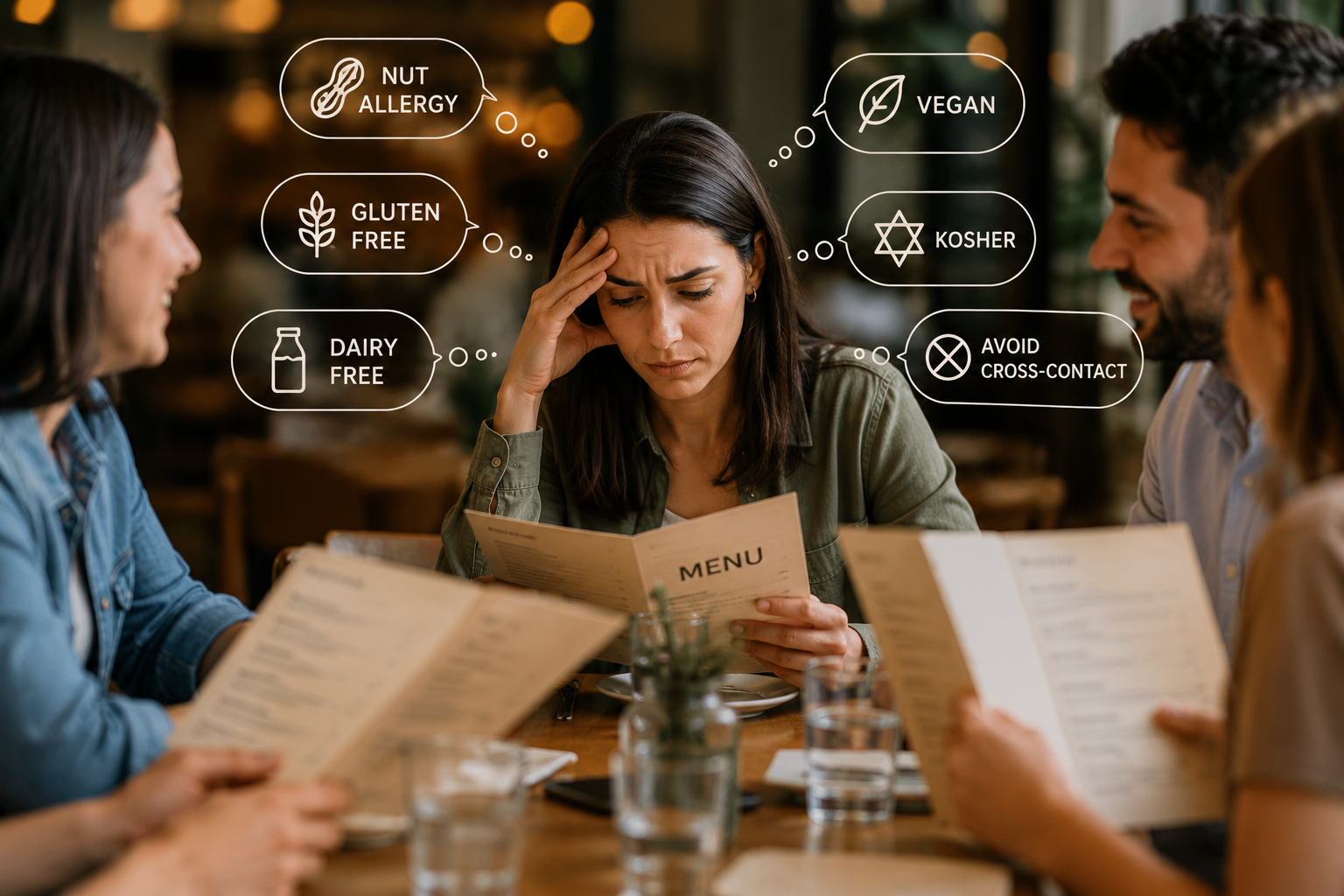
For someone with overlapping restrictions, the complexity grows quickly.
A diner may be gluten-free and dairy-free.
Or halal and nut-free.
Or vegan with a sesame allergy.
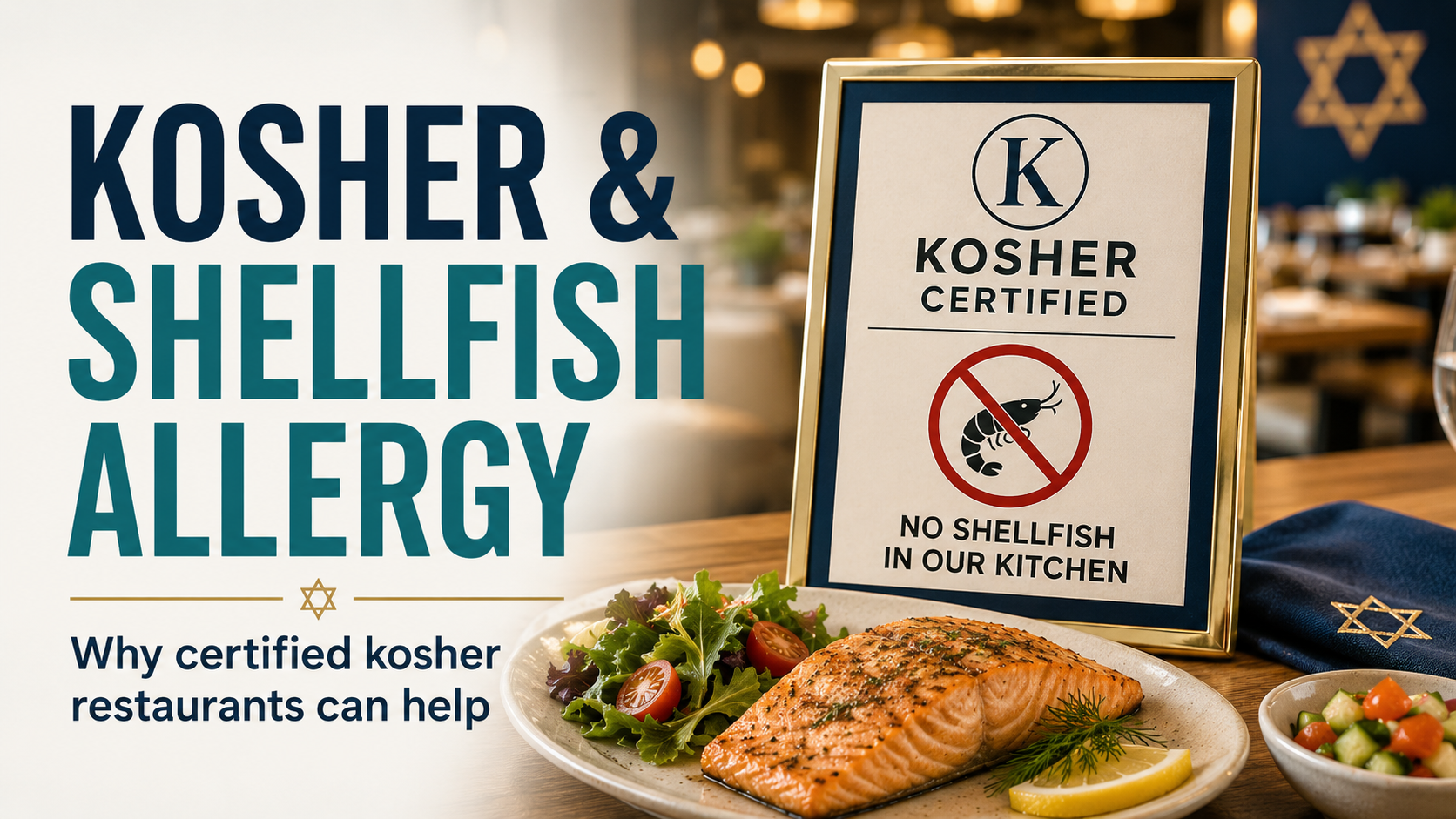
Or kosher and shellfish-allergic.
In those cases, one label rarely tells the full story.
A restaurant may meet one need while creating uncertainty around another.
That is why preparation details are so important.
How Simpa Thinks About Restaurant Practices
Simpa is built around a simple idea:
Restaurant discovery should not stop at menu labels.
A label like gluten-free, nut-free, dairy-free, or allergy-friendly can be a helpful starting point. But diners often need more context before deciding whether a restaurant is a realistic fit.
That context can include shared fryers, dedicated fryers, shared grills, shared prep surfaces, dedicated prep claims, cleaning practices, special requests, allergy notes, staff communication, and whether the restaurant can explain its own process.
Most importantly, restaurant practices need to be tied to specific ingredients.
A dedicated prep claim is much more useful when diners know whether it applies to gluten, peanuts, tree nuts, dairy, shellfish, sesame, or another concern.
A cleaning claim is much more useful when diners know whether it is a general sanitation routine or a specific allergy workflow.
A shared-fryer warning is much more useful when diners know what else goes into that fryer.
A special-request policy is much more useful when diners know what process the request actually triggers.
Simpa treats these details as restaurant transparency signals, not guarantees.
Community reports, owner-submitted information, freshness, and restaurant listing status all need to be interpreted carefully. A restaurant may provide useful information while still requiring diners to confirm ingredients, preparation methods, and cross-contact controls directly before ordering.
The goal is not to replace that conversation.
The goal is to make the conversation better.
Instead of starting with a vague label, diners should be able to start with better context.
What Restaurants Should Explain Clearly
This is not only a diner problem.
It is also a restaurant communication problem.
Restaurants that already take allergies seriously often struggle to show that clearly online.
A menu may say gluten-free options available, but not explain whether there is a dedicated fryer.
A restaurant may train staff on allergy orders, but not describe the process anywhere guests can see.
A kitchen may use clean utensils and marked tickets, but diners may never know which allergens that process is designed for.
Restaurants do not need to promise perfection.
But they should be clear about:
- which ingredients are used
- which ingredients are excluded from specific dishes
- which ingredients are excluded from dedicated prep zones
- whether fryers are shared or dedicated
- whether grills, griddles, prep surfaces, or utensils are shared
- whether special requests are accepted
- what process special requests trigger
- whether allergy notes are sent to the kitchen
- whether staff follow a repeatable allergy workflow
- what the restaurant cannot control
Better transparency helps restaurants explain what they can do.
It also helps them explain what they cannot do.
That honesty matters.
A restaurant does not have to claim it is safe for everyone.
It just needs to communicate clearly enough that diners can make better decisions.
Final Thought
“Allergy-friendly” should not be a mood.
It should be a process.
Ingredients matter.
But preparation decides whether the information is actually useful.
Shared fryers, shared grills, prep surfaces, utensils, cleaning practices, allergy notes, special requests, and staff workflow can all change the meaning of a menu label.
So can one missing detail:
Which ingredients are excluded from the process?
That is why diners need more than broad claims like nut-free, gluten-free, dairy-free, dedicated prep, special requests accepted, or we clean often.
They need specific restaurant context.
Because when someone is deciding where to eat, vague reassurance is not enough.
Clear process is better.
Ingredient-specific process is better still.
If you want to understand why labels alone can miss important risk, read Why “Allergy-Friendly” Menus Can Still Put Diners at Risk.
If you want to see why allergen information should be easier to search and filter, read Why Restaurant Allergen Menus Need to Move Beyond PDFs.
For a specific example of why broad labels need more detail, read Does Nut-Free Include Peanuts? Peanut-Free vs Tree-Nut-Free Explained.
If you are managing more than one food need at once, read How to Find Restaurants for Multiple Dietary Restrictions.
You can also start with our allergy and food restriction guide hub or read how Simpa handles restaurant and community data.
Sources and Notes
- The FDA lists major food allergen categories and explains food allergy labeling requirements for packaged foods: https://www.fda.gov/food/nutrition-food-labeling-and-critical-foods/food-allergies
- FARE explains that cross-contact happens when an allergen is inadvertently transferred from a food containing an allergen to a food that does not contain the allergen: https://www.foodallergy.org/resources/avoiding-cross-contact
- Food Allergy Canada explains that cross-contamination can happen when a small amount of a food allergen accidentally gets into another food through manufacturing or food preparation: https://foodallergycanada.ca/living-with-allergies/day-to-day-management/avoiding-cross-contamination/
- Beyond Celiac states that a separate fryer must be used for gluten-free items to avoid cross-contact: https://www.beyondceliac.org/gluten-free-diet/cross-contact/
- The Celiac Disease Foundation describes celiac disease as a serious autoimmune disease triggered by gluten ingestion in genetically predisposed people: https://celiac.org/about-celiac-disease/what-is-celiac-disease/
- Allergy standards, restaurant practices, and individual risk vary. Diners with food allergies, celiac disease, or serious dietary restrictions should follow their own medical guidance and confirm restaurant-specific details directly before ordering.