For anyone with food allergies, intolerances, or dietary restrictions, eating out can involve more than choosing what sounds good.
You may need to know whether a sauce contains dairy.
Whether a dressing includes egg.
Whether a bun contains sesame.
Whether a bowl, side, topping, or dessert includes wheat, soy, peanuts, tree nuts, fish, shellfish, gluten, or another ingredient you avoid.
That is why restaurant allergen menus matter.
They help diners understand what may be in a menu item before ordering. They give people a starting point before asking questions, comparing options, or deciding whether a restaurant feels like the right fit.
But there is a major problem.
Even when restaurants publish allergen information, it is often buried in PDFs, hidden website pages, oversized charts, or documents that are frustrating to use on a phone.
The information may technically exist.
That does not mean it is easy to use.
Restaurant Allergen Menus Are Useful, But Only If People Can Find Them
A good restaurant allergen menu helps people make faster, more informed decisions.
It can show which menu items contain common allergens, which dishes may match certain dietary needs, and which options are clearly not a fit.
That matters because ingredients are not always obvious from a menu name.
A crispy item may contain wheat.
A sauce may include dairy.
A dressing may contain egg.
A topping may contain sesame.
A dessert may include tree nuts even when the name does not make that clear.
For diners managing food allergies, intolerances, or dietary restrictions, this information can save time and reduce uncertainty before ordering.
But allergen menus are most useful when they are accessible.
If someone has to search through a restaurant website, open a PDF, zoom into a tiny table, and manually scan every row, the experience breaks down quickly.
Especially on the go.
Why Large Chains Usually Have Better Allergen Menus
If you search for restaurant allergen menus online, many of the clearest results come from large chains.
That is not an accident.
Major restaurant chains usually have more standardized menus, centralized suppliers, nutrition teams, internal documentation, and the resources to publish formal allergen charts.
Because their menu items are often built in similar ways across many locations, it is easier for them to organize allergen information into structured documents.
Smaller restaurants often work differently.
Their menus may change more often. Ingredients may vary by season, supplier, or location. Dishes may be adjusted by the kitchen. Staff may need to answer questions case by case.
That does not mean large chains are automatically better for every diner.
It means they are more likely to have allergen information available online.
For people searching for allergy-friendly restaurant options, that creates an uneven experience. A national chain may have a detailed allergen chart, while a local restaurant may have very little information published.
The result is simple: diners often start with the places where information is easiest to find.
The Problem With Restaurant Allergen PDFs
Many restaurants provide allergen information in the least convenient format possible: a PDF.
Sometimes the PDF is hidden in the website footer.
Sometimes it is buried under “nutrition,” “ingredients,” “food sensitivities,” “dietary information,” or another label that is easy to miss.
Sometimes it takes several clicks just to find the document.
Then the real work begins.
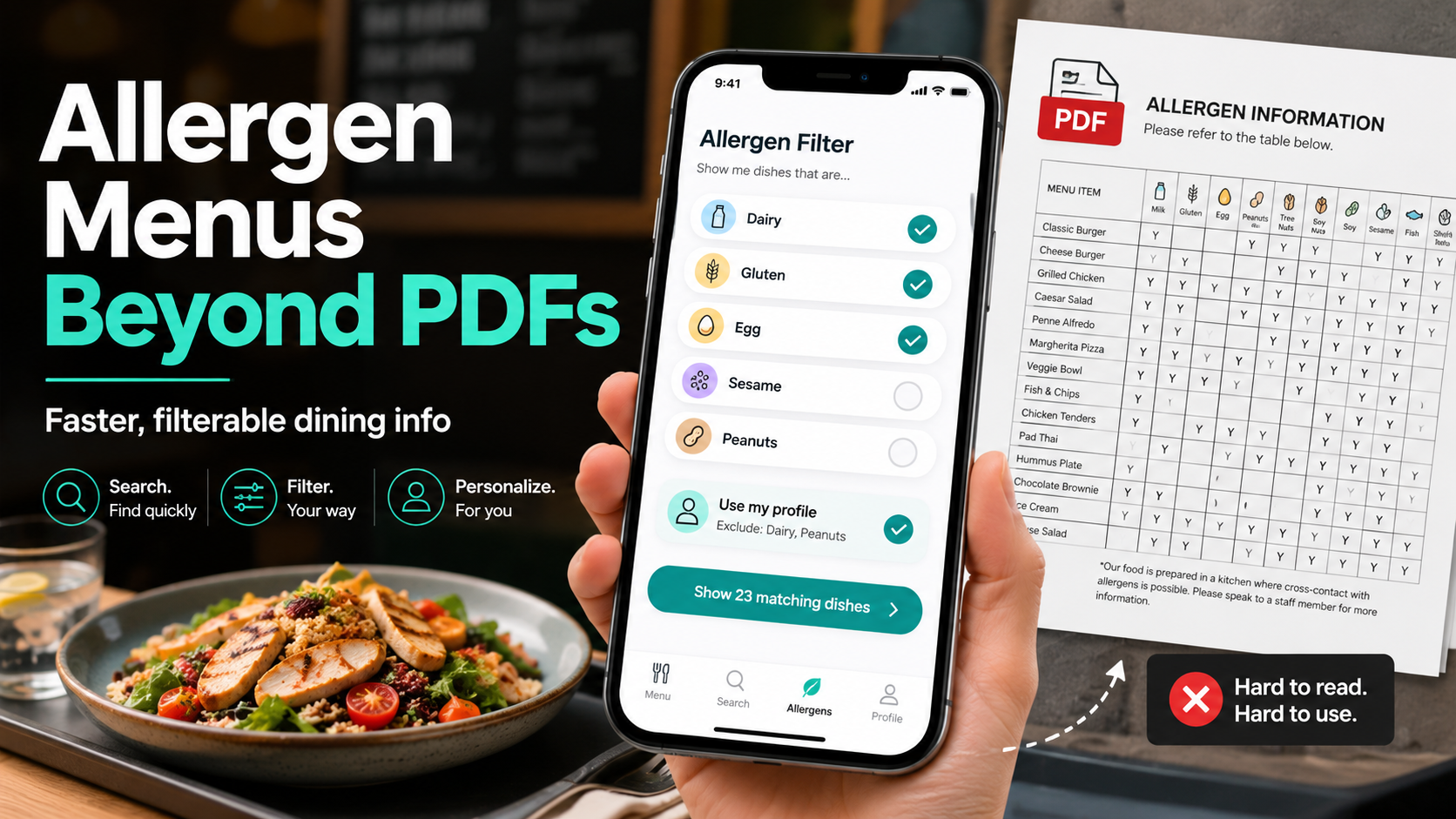
On mobile, restaurant allergen PDFs often mean tiny tables, sideways scrolling, constant zooming, and manual searching.
You have to remember your restrictions, scan each menu item, compare columns, and figure out whether an option contains one or more ingredients you are avoiding.
That might be manageable at home on a laptop.
It is much harder when you are standing in line, sitting with friends, ordering delivery, or trying to choose where to eat nearby.
The issue is not only whether allergen information exists.
The issue is whether people can actually use it when they need it.
Hidden Allergen Pages Create Friction
PDFs are only part of the problem.
Restaurant allergen information is often difficult to find in the first place.
Some restaurants place allergen menus on separate nutrition pages. Others link them through downloadable documents. Others use interactive website tools that are not always easy to use on mobile.
The labels are not consistent either.
One restaurant may call it an allergen menu.
Another may call it a nutrition guide.
Another may call it food sensitivities.
Another may call it ingredient information.
For diners, this creates a search problem before the food decision even begins.
They are not only asking, “What can I eat here?”
They are first asking, “Where is the information?”
That extra friction matters.
When someone is hungry, traveling, out with friends, or making a quick decision, hidden pages and clunky PDFs can push them away from a restaurant entirely.
Why Static Allergen Charts Are Hard to Use
Traditional allergen charts are built like spreadsheets.
That can be useful for completeness, but it is not always useful for decision-making.
A static chart forces the diner to do all the work.
You have to find the right menu category.
Then find the item.
Then scan across each allergen column.
Then compare that information with your own needs.
Then repeat that process for every other item you might order.
That becomes even harder for people avoiding more than one ingredient.
Someone avoiding dairy may only need one column.
But someone avoiding dairy, egg, sesame, and peanuts has to scan multiple columns at once.
Someone with a combination of allergies, intolerances, religious restrictions, or dietary preferences may need to check even more.
A static PDF can show the data.
It does not help people quickly narrow the menu.
That is where filters are much more useful.
Why Allergen Filters Are Better Than PDFs
PDFs show information.
Filters help people act on it.
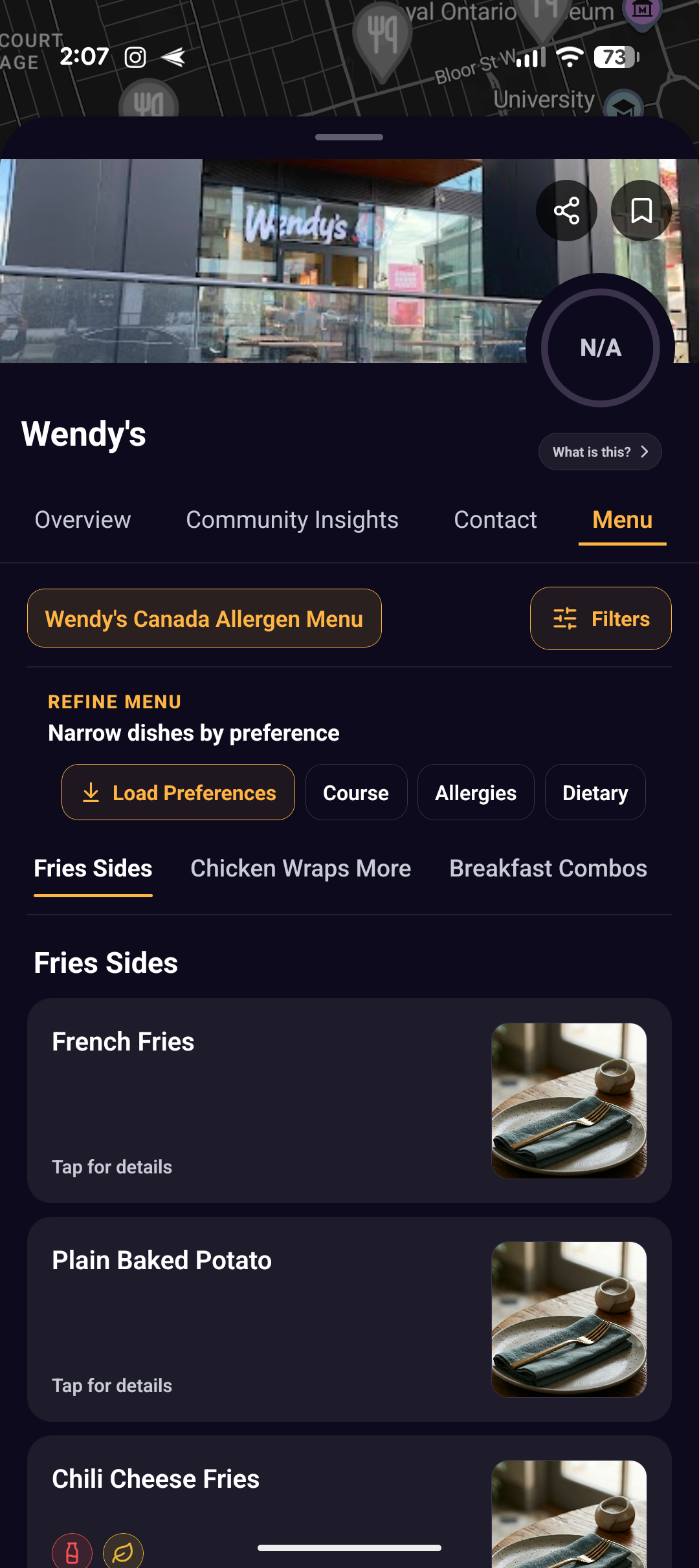
Instead of making diners scan a full allergen chart line by line, filters let them narrow the menu based on what matters to them.
Avoiding dairy?
Filter for it.
Avoiding gluten and egg?
Filter for both.
Trying to avoid sesame, peanuts, or tree nuts?
Use filters to focus on the options that may be more relevant.
A filterable allergen menu turns a long document into a faster decision tool.
That is a better fit for how people actually eat.
Most diners are not trying to read a full technical chart. They are trying to answer a practical question:
What options are worth looking at?
The Button That Makes Filters Personal
Filtering is useful.
But having to set the same filters again and again can still feel repetitive.
That is why Simpa includes a button that lets you import your profile directly into the filters.
Instead of manually selecting your allergens, intolerances, or dietary preferences every time, you can use your Simpa profile to apply your saved needs to the menu filters.
That button turns a general restaurant menu into something more personal.
If your profile includes dairy, sesame, peanuts, gluten, egg, or another restriction, you can bring that profile into the filter experience and quickly narrow the menu around what matters to you.
That means less scrolling.
Less manual checking.
Less starting from scratch.
And a faster path to the options that may be worth considering.
This is the difference between a static allergen PDF and a more useful dining tool.
A PDF makes you do the work.
Simpa’s filters, combined with the profile import button, help the menu work for you.
How Simpa Is Making Restaurant Allergen Menus Easier to Use
At Simpa, we are gradually uploading allergen menus from select restaurant chains and making them easier to search and filter.
Chipotle and Wendy’s in Canada are already part of this work, and we are continuing to add more chains over time.
The goal is practical.
When someone is deciding where to eat, they should not have to dig through hidden pages or scroll through complicated PDFs just to find basic allergen information.
They should be able to open a restaurant, tap a button to import their profile into the filters, and quickly see which options may be worth considering.
Simpa helps make allergen information more mobile-friendly, searchable, filterable, and personalized.
That does not replace official restaurant information or conversations with staff.
Menus, ingredients, suppliers, and preparation methods can change. People with severe allergies should always take extra precautions and confirm details directly with the restaurant.
But Simpa can make the first step easier.
Finding relevant allergen information should take seconds, not a research session.
Allergen Menus Should Match How People Actually Eat
Restaurant allergen menus are not just documents.
They are decision tools.
And decision tools need to be fast, clear, and easy to use.
Diners do not want to hunt through websites.
They do not want to download PDFs.
They do not want to pinch, zoom, and scan tiny charts on their phones while everyone else is ready to order.
They want clear information that matches their needs.
That is why restaurant allergen menus need to move beyond PDFs.
The future is searchable.
The future is filterable.
The future is mobile-friendly.
And when possible, the future should be personalized to the diner with one simple action.
Final Thought
Restaurant allergen menus are useful because they help turn uncertainty into information.
But the format matters.
A hidden PDF may technically provide allergen data, but it often puts too much work on the person trying to use it.
A filterable menu is different.
A profile-powered filter is even better.
That is what Simpa is working toward: making restaurant allergen information easier to find, easier to filter, and easier to personalize on the go.
Because when you are deciding what to eat, allergen information should not be buried in a document.
It should be ready when you need it.
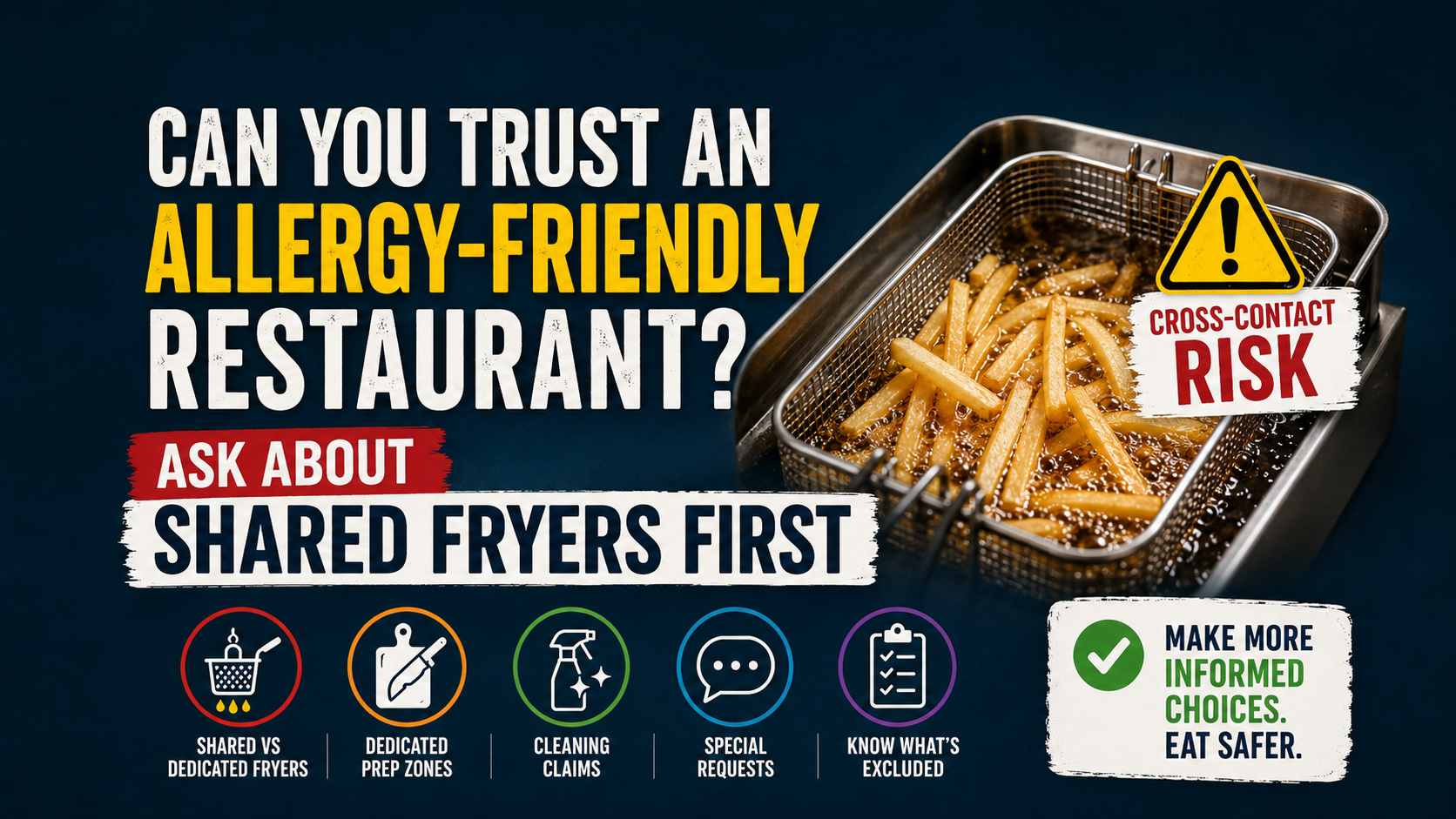
Allergen menus are a helpful starting point, but they do not always explain kitchen practices like shared equipment, preparation surfaces, or cross-contact. We cover that risk in more detail in Why “Allergy-Friendly” Menus Can Still Put Diners at Risk.
If you are trying to understand how different allergies, intolerances, and dietary needs affect eating out, start with our allergy and food restriction guide hub. You can also read how Simpa handles restaurant and community data.