“Nut-free” sounds like a simple restaurant label.
But it can mean several different things.
For one diner, nut-free may mean peanut-free.
For another, it may mean tree-nut-free.
For someone else, it may mean no peanuts, no tree nuts, and no shared prep with either.
That difference matters because peanut allergy and tree nut allergy are not interchangeable, even though both are often grouped together under the broad term “nut allergy.”
Most Peanut and Tree Nut Allergies Do Not Overlap
Some people are allergic to both peanuts and tree nuts, but the majority isn’t.
The American Academy of Allergy, Asthma & Immunology says about 30% of peanut-allergic individuals are also allergic to tree nuts.
FARE notes that approximately 40% of children with tree nut allergies also have a peanut allergy.
These figures challenge the umbrella term “nut allergy.” In both cases, the majority are allergic to one without also being allergic to the other.
Peanuts and Tree Nuts Are Different
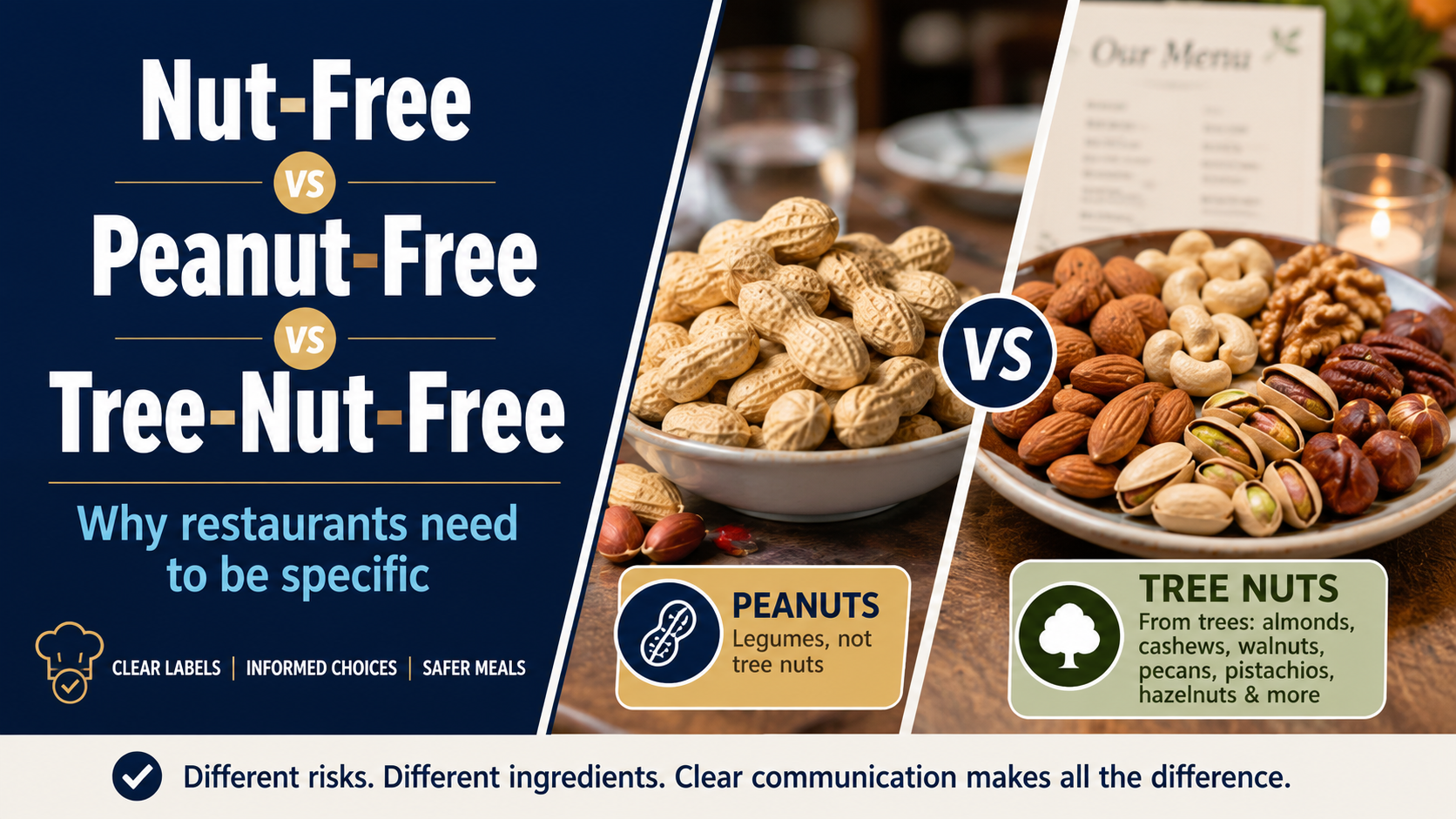
Peanuts are not tree nuts.
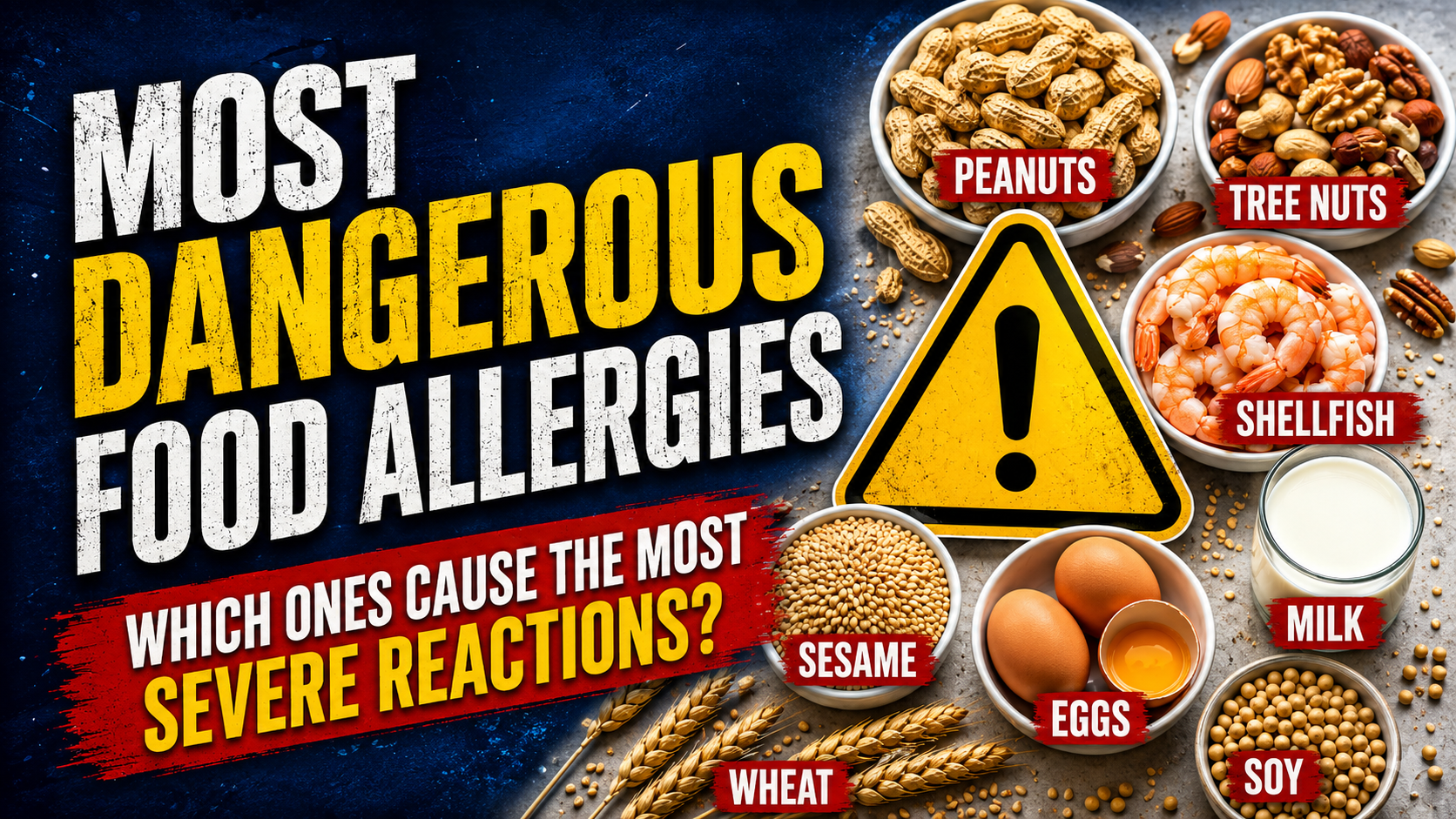
Peanuts grow underground and are legumes. Tree nuts grow on trees and include foods such as almonds, cashews, walnuts, pistachios, pecans, hazelnuts, Brazil nuts, macadamia nuts, and others.
And this is where the umbrella term starts to get a little strange.
If “nut-free” automatically includes peanuts even though peanuts are legumes, why wouldn’t it include coconut too, which is botanically a drupe?
At least under FDA allergen labeling, that used to be the case until 2025, when the FDA removed coconut from its Tree Nut List for major food allergen labeling. This makes the category seem even more inconsistent.
The point is not that coconut allergy should be grouped with peanut or tree nut allergy. It is that the word “nut” alone is not a particularly good way to decide which allergens belong together.
The U.S. Food and Drug Administration treats peanuts and tree nuts as separate major food allergen categories.
For restaurants and diners, that distinction is useful for a simple reason: answering one question does not automatically answer the other.
A restaurant that does not use peanuts may still use tree nuts, while a restaurant that does not use tree nuts may still use peanuts.
That is why “nut-free” can be too vague.
Where Peanuts and Tree Nuts Show Up at Restaurants
For a peanut-allergic diner, the bigger concern may be savory dishes, sauces, dressings, toppings, and foods made with peanut butter or crushed peanuts.
Tree nuts are far more common across desserts, baked goods, pastries, pesto, and dishes made with nut flours or creams. This is not to say that peanuts can’t appear in desserts too, but this is much more rare, and usually in the form of peanut butter.
| Restaurant area | Peanut-free concern | Tree-nut-free concern | Why it matters |
|---|---|---|---|
| Sauces and marinades | Peanut sauce, satay, mole, peanut-based dressings | Pesto, cashew cream, almond-based sauces | Sauces are often made ahead and may not be obvious from the menu name. |
| Desserts and bakery items | Peanut butter desserts, peanut candies, crushed peanut toppings | Almond flour, marzipan, praline, pistachio, hazelnut, walnut, pecan | Tree nuts are especially common in desserts, pastries, cookies, cakes, and bakery cases. |
| Salads and bowls | Crushed peanuts, peanut dressings | Walnut, almond, pecan, cashew, pistachio | Garnishes may be added separately from the main ingredients. |
| Vegan or dairy-free dishes | Peanut sauces or toppings in some dishes | Cashew cream, almond milk, nut cheeses, nut-based sauces | Tree nuts are commonly used to create creamy textures without dairy. |
| Ice cream and dessert stations | Peanut butter flavors, peanut toppings, candy mix-ins | Pistachio, hazelnut, almond, walnut, praline | Shared scoops and topping bins can introduce another layer of cross-contact risk. |
| Prep and garnish stations | Crushed peanut containers, peanut sauce ladles | Nut garnishes, pesto spoons, bakery tools, salad toppings | The ordered dish may not contain the allergen even though it is handled nearby. |
These patterns are not a way to decide whether a restaurant is safe. They simply show why a peanut-free question and a tree-nut-free question may send staff looking at different ingredients and parts of the kitchen.
Cross-Contact Changes the Question
Even when a dish does not contain peanuts or tree nuts as ingredients, cross-contact can still matter.
Cross-contact can happen when a small amount of an allergen is accidentally transferred to another food through prep surfaces, utensils, hands, gloves, equipment, containers, oils, scoops, or shared stations.
For peanut and tree nut allergies, that may mean checking shared bakery or dessert equipment, garnish stations, blenders, cutting boards, utensils, fryers, or woks depending on how the restaurant operates.
This is why knowing that an allergen is absent from the ingredient list does not necessarily tell a diner how the food is prepared.
A more useful restaurant answer explains both what is in the dish and how an allergy order is handled.
What a Better Restaurant Answer Sounds Like
A vague answer sounds like this:
“We are pretty nut-free.”
That leaves the diner with almost the same question they started with.
A more useful answer sounds like this:
“We do not use peanuts in the kitchen, but we do use almonds and pistachios in desserts. Desserts are prepared in a shared area, so we would not recommend them for a tree nut allergy.”
Or:
“We use peanut sauce in two dishes. We can mark the order as a peanut allergy and use clean utensils, but we cannot guarantee no cross-contact.”
Those answers do not promise that a restaurant is completely risk-free.
They are useful because they are specific about what the restaurant uses, what precautions it can take, and where uncertainty remains.
That tells a diner much more than a broad “nut-free” badge.
How Simpa Handles Peanut and Tree Nut Allergies
This distinction is why Simpa does not treat “nut-free” as one vague category.
Simpa separates Peanuts from Tree Nuts.
Tree Nuts can still work as a broader filter for diners who avoid the whole category, but tree nuts are a family of foods rather than one ingredient.
That family includes almonds, Brazil nuts, cashews, hazelnuts, macadamia nuts, pecans, pine nuts, pistachios, and walnuts.
So Simpa keeps more detail behind the broader Tree Nuts category.
When diners write reviews, they can select the individual tree nuts that matter to them rather than relying only on the umbrella term.
Restaurants can also specify which individual tree nuts they use instead of choosing one generic “tree nut” option.
That allows Simpa to reflect the fact that someone may need to avoid peanuts but not tree nuts, tree nuts but not peanuts, only certain tree nuts, or both peanuts and the entire tree nut family.
And any of those diners may also be gluten-free, dairy-free, halal, kosher, vegan, or managing another food restriction at the same time.
A single “nut-free” label cannot communicate all of that clearly.
Final Thought
“Nut-free” can be useful as a starting point, but peanut allergy and tree nut allergy are not the same thing.
The overlap between them is far from universal, the FDA treats them as separate major allergen categories, and restaurants may use them in very different ways.
For diners who need to avoid one or both, knowing exactly what “nut-free” means is more useful than the label itself.
Sources and Notes
- FARE explains that peanuts are legumes, not tree nuts, and notes that approximately 40% of children with tree nut allergies also have an allergy to peanut: https://www.foodallergy.org/living-food-allergies/food-allergy-essentials/common-allergens/tree-nut
- The American Academy of Allergy, Asthma & Immunology says approximately 30% of peanut-allergic individuals are also allergic to tree nuts: https://www.aaaai.org/tools-for-the-public/conditions-library/allergies/everything-you-need-to-know-about-tree-nut-allergy
- The FDA treats peanuts and tree nuts as separate major food allergen categories: https://www.fda.gov/food/buy-store-serve-safe-food/food-allergies-what-you-need-know
- In 2025, the FDA removed coconut from the Tree Nut List used for major food allergen labeling: https://www.fda.gov/food/food-allergensgluten-free-guidance-documents-regulatory-information/frequently-asked-questions-food-allergen-labeling-guidance-industry
- Food Allergy Canada advises diners to ask restaurant staff about ingredients and possible cross-contamination when dining out with food allergies: https://foodallergycanada.ca/living-with-allergies/day-to-day-management/dining-out/
- Food Allergy Canada explains that cross-contamination can happen when a small amount of a food allergen accidentally gets into another food through manufacturing or food preparation: https://foodallergycanada.ca/living-with-allergies/day-to-day-management/avoiding-cross-contamination/
- Allergy needs and individual risk vary. Diners with food allergies should follow their own medical guidance and confirm restaurant-specific details directly before ordering.