
Peanut butter gets banned from classrooms.
Milk usually does not. Neither do sesame buns, eggs, wheat, soy, fish, or shellfish.
So it is fair to ask:
Are peanut allergies actually more dangerous than other food allergies?
When danger is measured by recorded fatal reactions, peanuts have the strongest claim.
A review of anaphylaxis deaths in Ontario identified 40 deaths caused by food. Peanuts caused 16 of them, or 40%. Tree nuts caused another 6, bringing peanuts and tree nuts together to 55% of the food-related deaths in the study.
Seafood caused 4 deaths, or 10%. Milk caused 1.
A 2024 review in JAMA also identifies peanut as the leading food-related cause of fatal and near-fatal anaphylaxis in the United States, followed by tree nuts and shellfish.
That gives us a useful answer rather than a vague one:
Peanuts and tree nuts lead the fatality data, while other allergens become dangerous through different combinations of severity, persistence, hidden exposure, and kitchen cross-contact.
Which Food Allergies Cause the Most Fatal Reactions?
The Ontario study provides one of the clearest numerical comparisons.
| Allergen | Recorded deaths | Share of food-related deaths |
|---|---|---|
| Peanut | 16 | 40% |
| Tree nuts | 6 | 15% |
| Seafood | 4 | 10% |
| Milk | 1 | 2.5% |
| Other identified foods | 7 | 17.5% |
| Unknown food | 6 | 15% |
Peanuts and tree nuts together accounted for more than half of the food-anaphylaxis deaths in that dataset.
The percentages describe the share of recorded deaths attributed to each trigger. They do not mean that 40% of people with peanut allergy will experience a fatal reaction.
A separate systematic review estimated the rate of fatal peanut anaphylaxis at 2.13 deaths per million peanut-allergic person-years. Fatal reactions are rare at the individual level, but peanuts still appear disproportionately often when fatal cases are grouped by allergen.
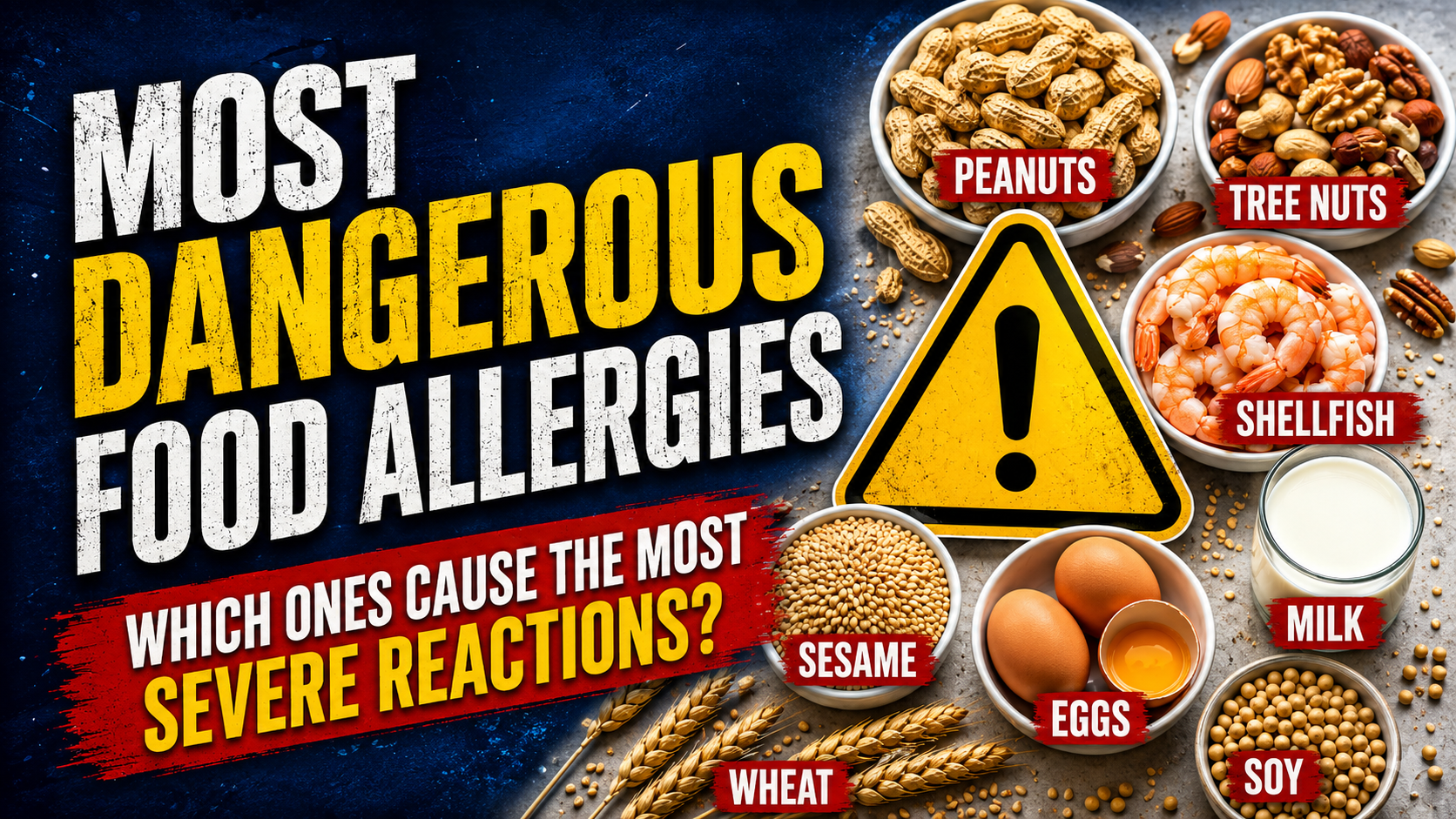
The FDA identifies milk, egg, fish, crustacean shellfish, tree nuts, peanuts, wheat, soybeans, and sesame as the nine major food allergens in the United States.
These are often called the Big 9. The name groups them together for labeling purposes, not because they create identical risks.
Why Peanuts and Tree Nuts Rank First
Peanut and tree nut allergies combine several factors that make them unusually concerning.
They are strongly represented in fatal and near-fatal reaction data. They also tend to persist longer than milk, egg, wheat, or soy allergies, creating more years in which accidental exposure can happen.
Peanuts can appear in sauces, curries, marinades, baked goods, desserts, cooking oils, and protein products. Tree nuts may be used in pesto, pastries, granola, salads, vegan cheeses, sauces, and nut-based creams.
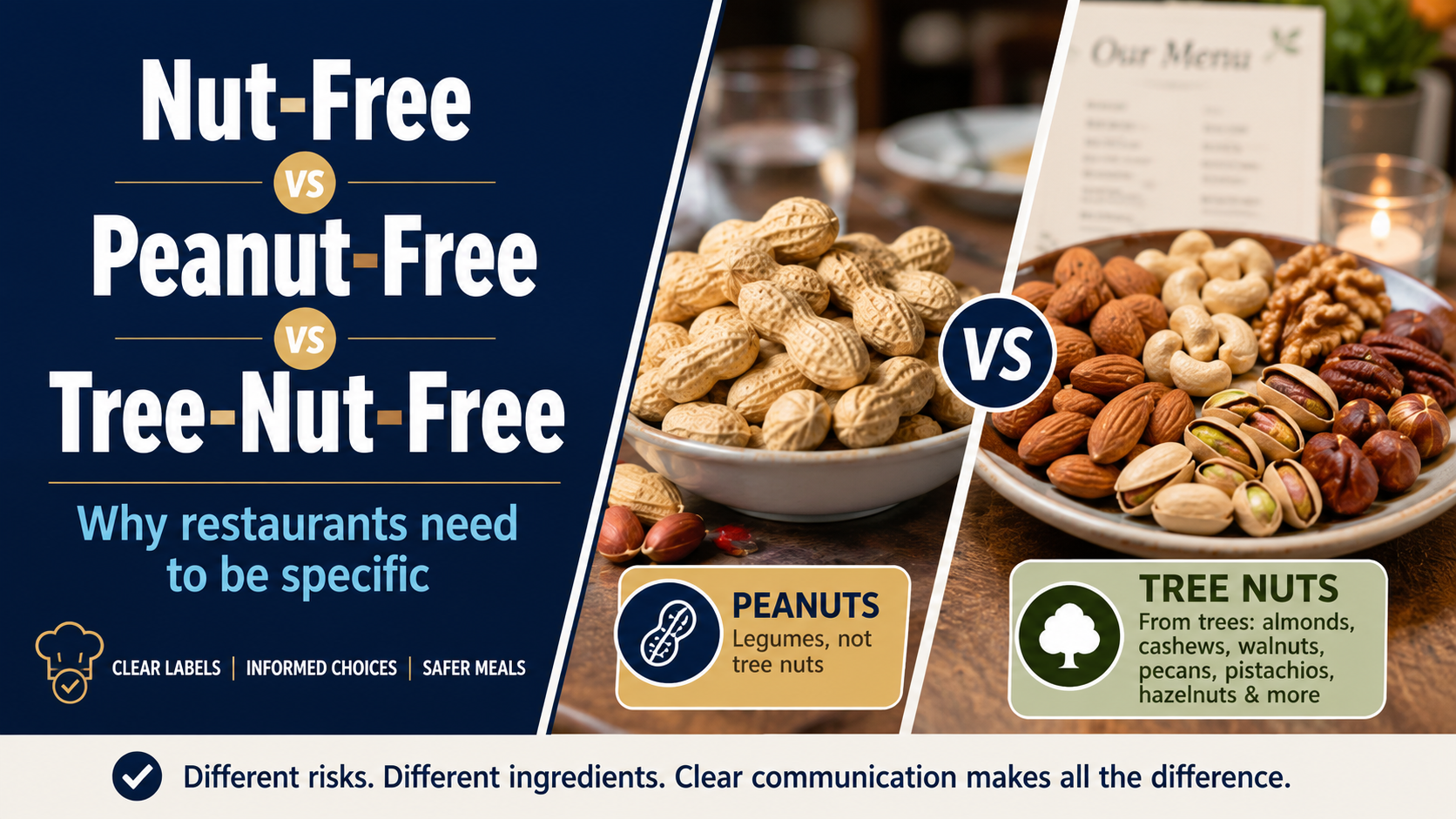
The tree nut label also covers several distinct foods, including almonds, Brazil nuts, cashews, hazelnuts, macadamia nuts, pecans, pistachios, and walnuts.
That matters because a person may be allergic to some tree nuts but not others. A warning that says only “contains nuts” identifies danger without providing enough detail to understand it.
Why Peanut Butter Gets Banned From Schools
Peanut butter is not the only food capable of causing anaphylaxis.
It is unusually difficult to contain around children.
It is inexpensive, popular, easy to pack, and does not require refrigeration. It is also sticky enough to move from a sandwich onto fingers, desks, lunch tables, wrappers, bottles, door handles, and shared supplies.
Children may trade food, touch one another’s belongings, forget to wash their hands, or fail to recognize the early signs of a reaction.
Removing peanut butter gives schools a visible and preventable exposure they can reduce.
A peanut-free policy does not prove that every peanut allergy is more severe than every milk, egg, sesame, or shellfish allergy. Peanut butter is simply easier to identify and remove than allergens hidden inside prepared foods.
Cow’s Milk Allergy Is Easy to Underestimate
Milk rarely creates the same public alarm as peanuts.
That can make it seem less serious than it is.
Cow’s milk allergy is especially common in infants and young children, and severe or fatal reactions can occur. In one review of 17 food-anaphylaxis deaths among people aged 18 or younger, peanuts and tree nuts caused 12 deaths and milk caused 4.
Milk allergy often resolves with age, but the change can take much longer than many people assume.
A large US study of children with IgE-mediated cow’s milk allergy found that 19% had outgrown it by age 4. That rose to 42% by age 8, 64% by age 12, and 79% by age 16.
Put another way, more than half of the children in that study were still allergic at age 8, and about one in five remained allergic at age 16.
Those numbers help explain why milk should not be dismissed as a temporary infant allergy. Many children outgrow it, but those who have not remain vulnerable throughout school and adolescence.
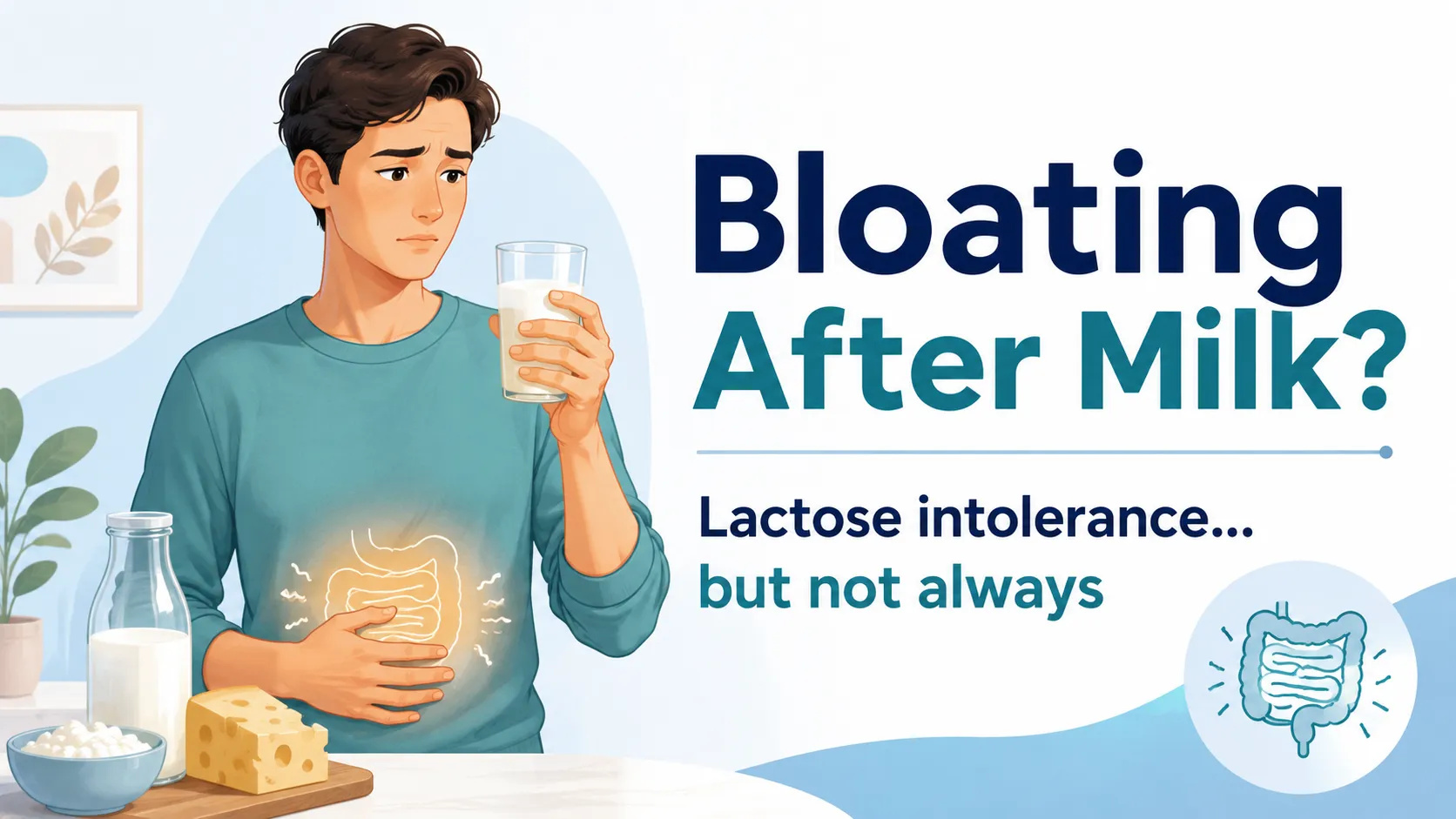
Milk is also difficult to control in restaurants because dairy moves through kitchens in many forms. Butter may be used on a grill, cream may be added to soup, milk powder may be baked into bread, whey may appear in sauce, and cheese may be handled on shared equipment.
A restaurant can remove an obvious dairy ingredient and still prepare the meal on a surface coated with butter.
“Dairy-free” can describe the recipe.
It does not always describe the kitchen.
Shellfish Is a Major Adult Risk
Shellfish allergy has a different pattern.
It commonly begins in adulthood, often persists for life, and is strongly associated with severe reactions. About 60% of people with shellfish allergy experience their first reaction as adults, according to FARE.
In the Ontario fatality review, seafood caused 4 of the 40 food-related deaths, or 10%.
The practical risk rises sharply in seafood-heavy kitchens. Shrimp, crab, lobster, clams, mussels, oysters, scallops, and fish may pass through the same fryers, grills, knives, cutting boards, broths, sauces, and preparation surfaces.
A dish does not need to list shrimp or crab for exposure to become possible. Shellfish stock may be used in a sauce, shrimp may share a fryer with other food, or several dishes may be assembled on the same surface.
The word “shellfish” is also broader than it sounds. It combines crustaceans such as shrimp, crab, and lobster with mollusks such as clams, mussels, oysters, and scallops, even though a person may react to one group and tolerate the other.
We explore that distinction in What Is the Shellfish Allergy Category Hiding?.
Fish Allergy Can Hide Outside Seafood Dishes
Fish allergy also commonly persists into adulthood.
The obvious exposures are easy to recognize. A salmon fillet or tuna sandwich clearly contains fish.
The less obvious sources include anchovies in Caesar dressing, fish sauce in marinades and curries, and fish-based broths or fermented sauces whose presence may not be clear from the menu description.
Restaurant type changes the exposure profile. In a seafood restaurant, fish may move through grills, fryers, cutting boards, sauces, and preparation areas throughout the day.
For someone with fish allergy, the important question is not only whether a selected dish contains fish.
It is also how extensively fish is handled in the kitchen.
Sesame Is Easy to Miss
Sesame became the ninth major food allergen in the United States under the FASTER Act. Federal labeling requirements for packaged foods took effect on January 1, 2023.
Sesame can cause serious reactions while remaining less visible than peanuts or shellfish.
It may appear as seeds on bread, but it can also be ground into tahini, mixed into hummus, added to dressings, baked into crackers, or incorporated into sauces and seasoning blends.
Its form changes how easy it is to recognize.
Seeds on a bun are visible. Sesame inside a sauce or spice mixture is not.
Awareness can also vary among restaurant staff. Someone may immediately recognize the seriousness of a peanut allergy while being less prepared to investigate sesame in bread, premade sauces, or supplier ingredients.
Packaged-food labeling helps in grocery stores. Restaurant meals still depend heavily on accurate recipes, supplier information, and staff communication.
Egg, Wheat, and Soy Are Built Into Everyday Food
Egg, wheat, and soy allergies are more likely to resolve during childhood than peanut, tree nut, fish, or shellfish allergies.
Their main challenge is not persistence. It is reach.
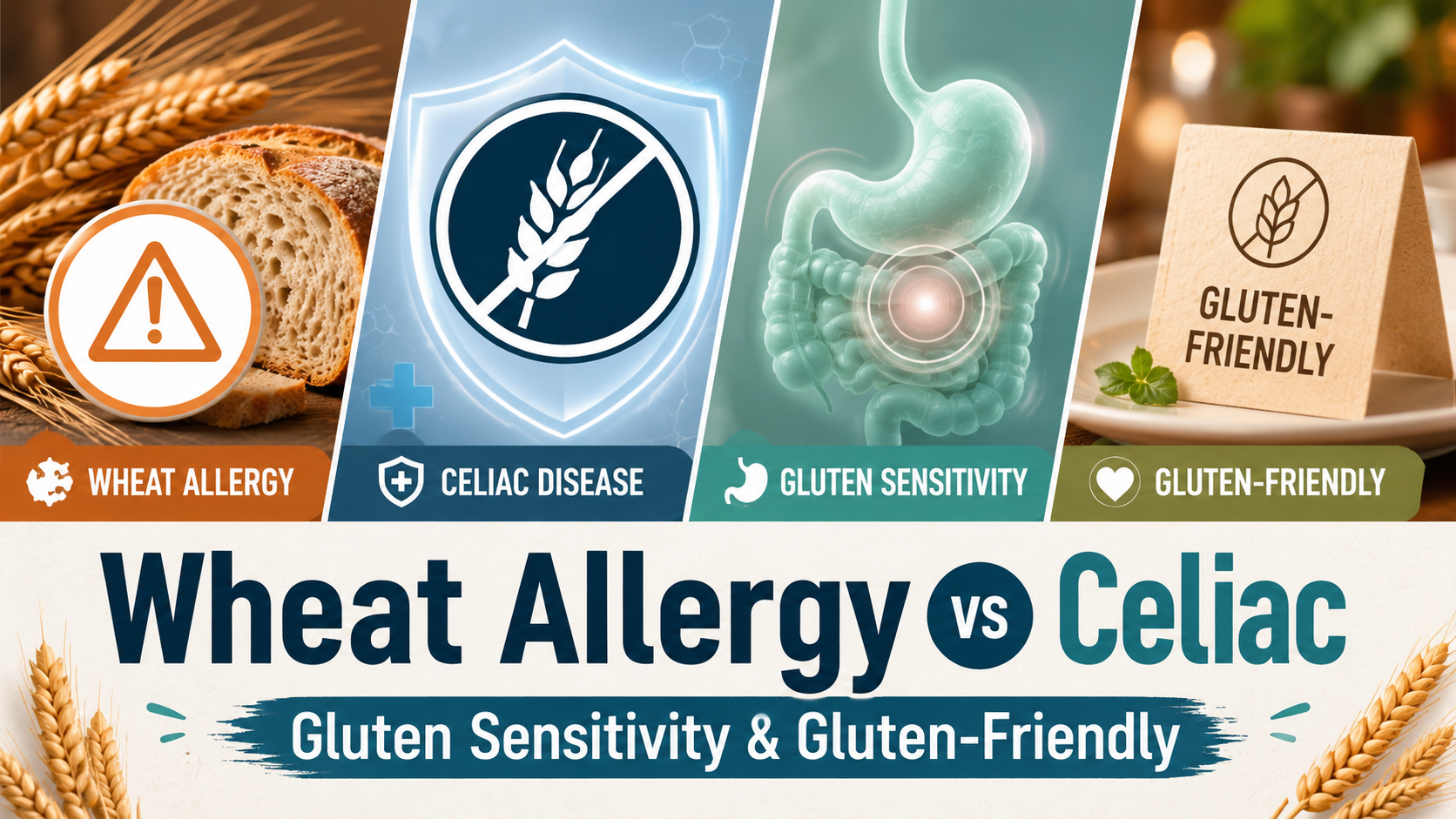
Egg may be used in mayonnaise, pasta, batters, pastries, glazes, desserts, and fried coatings. Wheat may appear in breading, sauces, thickeners, soy sauce, soups, and shared fryers. Soy may be present in marinades, processed foods, vegetarian dishes, meat substitutes, and seasoning blends.
The food named on the menu may not be the source of exposure.
The chicken may contain no egg, but the coating does. The vegetables may contain no wheat, but the sauce does. The fries may contain no wheat as an ingredient, but they may share oil with breaded food. The tofu may be obvious, while soy in a marinade is not.
These allergens are difficult because they are woven into ordinary preparation rather than confined to one obvious type of dish.
So Which Food Allergies Are the Most Dangerous?
The evidence supports a hierarchy, but the hierarchy depends on what is being measured.
Peanuts and tree nuts rank first when the measure is their share of recorded fatal food-anaphylaxis cases. In the Ontario review, they caused 55% of food-related deaths.
Shellfish is another leading severe-reaction risk, particularly among adults, and becomes harder to control in seafood-heavy kitchens.
Cow’s milk deserves greater attention in children. It can cause fatal reactions, and although many children eventually outgrow it, the available data suggests that more than half may still be allergic at age 8.
Fish and sesame create serious risks through persistence and low visibility. Egg, wheat, and soy are more likely to be outgrown but appear throughout everyday food preparation.
That makes the strongest overall answer:
Peanuts and tree nuts lead the fatality data. Shellfish is a major adult risk. Milk is an underestimated childhood risk. The remaining major allergens become dangerous largely through how easily they can be hidden or spread during preparation.
Why Restaurant Risk Is Different
A packaged product may have a standardized ingredient list and a major-allergen declaration.
A restaurant dish may involve supplier changes, premade sauces, substitutions, shared equipment, verbal communication, and several employees working in the same space.
The menu describes what the restaurant intends to serve.
It may not describe everything the food touches.
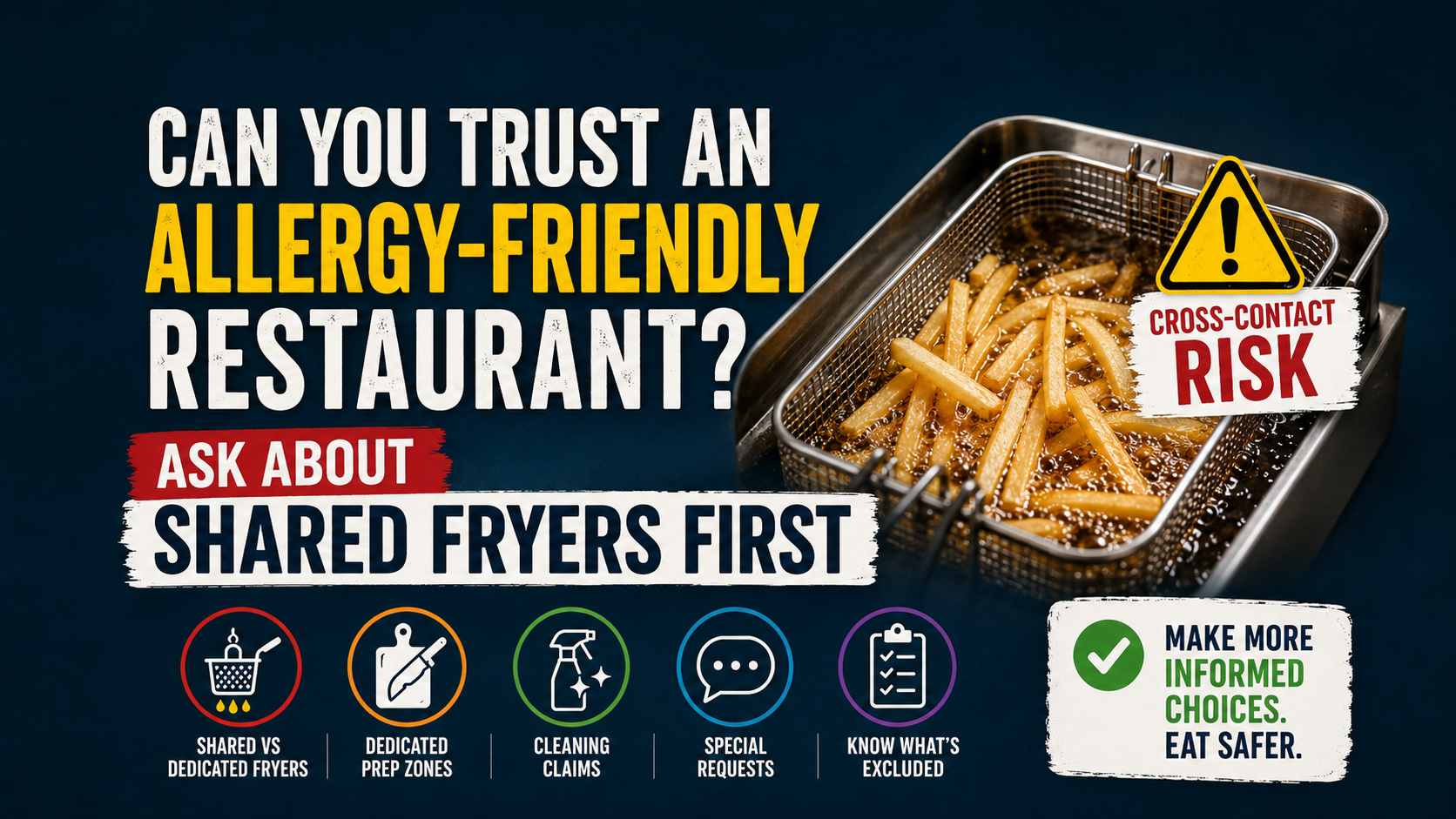
A peanut-free dish may be prepared near peanut sauce. A dairy-free dish may touch butter on a grill. A wheat-free item may enter a shared fryer. A shellfish-free meal may be prepared on a surface used for shrimp. A sesame-free burger patty may pass through a kitchen handling sesame buns all day.
Ingredient information and preparation information therefore answer different questions.
The first tells a diner what belongs in the recipe.
The second reveals what may happen before the meal reaches the table.
Why Better Food Transparency Matters
A symbol beside a menu item cannot explain which exact allergen is present, whether it appears in a sauce or marinade, whether equipment is shared, or whether the restaurant verified the full recipe.
Those details often determine whether a dish is suitable for a particular person.
Useful restaurant information should make three things clear: what the food contains, how it is prepared, and where cross-contact may occur.
That is more informative than a broad label such as “allergy-friendly,” and more honest than presenting a recipe as if it exists separately from the kitchen preparing it.
Final Thought
Peanut is the clearest answer when the question is which single allergen causes the largest share of recorded fatal food-allergic reactions.
In one Ontario review, peanuts caused 40% of food-anaphylaxis deaths. Peanuts and tree nuts together caused 55%.
That is why they receive so much attention.
But the numbers also reveal why other allergies should not be treated as minor. Shellfish caused 10% of the food deaths in the same study. Milk has accounted for a notable share of fatal childhood cases, and about 21% of children in one long-term study had still not outgrown their milk allergy by age 16.
The most useful conclusion is not that all allergies are equally dangerous.
It is that they become dangerous in different ways, and restaurant labels rarely show enough information to explain those differences.
Food should bring people together.
It should not leave someone guessing what is in a dish or how it was prepared.
Sources and Notes
A retrospective review of anaphylaxis deaths in Ontario identified 40 food-related deaths. Peanuts caused 16, tree nuts caused 6, seafood caused 4, and milk caused 1:
https://pmc.ncbi.nlm.nih.gov/articles/PMC4322510/
A systematic review estimated fatal peanut anaphylaxis at 2.13 deaths per million peanut-allergic person-years:
https://pmc.ncbi.nlm.nih.gov/articles/PMC4165304/
A 2024 JAMA review identifies peanut as the leading food-related cause of fatal and near-fatal anaphylaxis in the United States, followed by tree nuts and shellfish:
https://pubmed.ncbi.nlm.nih.gov/38349368/
A review of fatal food anaphylaxis reported that peanuts and tree nuts caused 12 and milk caused 4 of 17 fatalities among people aged 18 or younger in one US registry:
https://pmc.ncbi.nlm.nih.gov/articles/PMC10913226/
A US study of the natural history of IgE-mediated cow’s milk allergy reported resolution rates of 19% by age 4, 42% by age 8, 64% by age 12, and 79% by age 16:
https://pubmed.ncbi.nlm.nih.gov/17935766/
The FDA identifies milk, egg, fish, crustacean shellfish, tree nuts, peanuts, wheat, soybeans, and sesame as the nine major food allergens in the United States:
https://www.fda.gov/food/nutrition-food-labeling-and-critical-foods/food-allergies
The FDA explains that sesame became the ninth major food allergen, with federal labeling requirements taking effect on January 1, 2023:
https://www.fda.gov/food/food-allergies/faster-act-sesame-ninth-major-food-allergen
FARE provides information about shellfish allergy, including its persistence and tendency to begin in adulthood:
https://www.foodallergy.org/living-food-allergies/food-allergy-essentials/common-allergens/shellfish