
If you feel bloated after drinking milk, lactose intolerance is one possible explanation, but bloating alone does not prove it.
The timing, the amount of milk, your other symptoms, and whether the same reaction happens with lactose-free milk can provide useful clues. Other foods, digestive conditions, and milk allergy can cause similar discomfort.
The timing and pattern can provide useful clues, but symptoms alone cannot confirm the cause.
Lactose intolerance is a digestive problem involving lactose, the natural sugar in milk. It is different from a milk allergy, which is an immune reaction to milk proteins. It is also different from simply choosing to avoid dairy or feeling unwell after a particular rich meal.
The Short Answer
The most common lactose intolerance symptoms are:
- bloating or a swollen feeling in the abdomen
- gas and flatulence
- stomach cramps or abdominal pain
- rumbling or louder bowel sounds
- diarrhea or loose stools
- nausea, and sometimes vomiting
Symptoms often begin within 30 minutes to two hours after eating or drinking lactose, although some people notice them later within the same few hours. The amount of lactose, the food it is eaten in, and a person’s remaining lactase activity all affect the reaction. MedlinePlus
Most people with lactose intolerance do not need to avoid every dairy product. Many can tolerate some lactose, particularly smaller amounts eaten with other food or lower-lactose products. Individual tolerance varies, so a symptom pattern is more useful than a universal list of forbidden foods. NIDDK
What Causes the Symptoms?
Lactose normally reaches the small intestine, where the enzyme lactase breaks it into simpler sugars that can be absorbed.
When the small intestine makes too little lactase, some lactose continues into the colon. Bacteria ferment it there, producing gases and other compounds. The unabsorbed lactose also draws water into the intestine.
That combination can lead to bloating, gas, cramping, urgency, and diarrhea.
Lactose malabsorption and lactose intolerance are related but not identical terms:
| Term | Meaning |
|---|---|
| Lactose malabsorption | The small intestine does not digest or absorb all the lactose consumed. |
| Lactose intolerance | Digestive symptoms occur after consuming lactose. |
| Lactase persistence | Lactase production continues into adulthood at a higher level than is typical in most humans. |
| Milk allergy | The immune system reacts to proteins in milk rather than to the lactose sugar. |
Someone can have reduced lactase activity without developing noticeable symptoms. Symptoms are more likely when the amount of lactose exceeds that person’s ability to digest it.
How Soon Do Lactose Intolerance Symptoms Begin?
Symptoms commonly appear within 30 minutes to two hours after milk or another lactose-containing food. Some medical references describe the window more broadly as within a few hours.
The timing is useful, but it is not a diagnosis by itself. A meal may contain several possible triggers, and digestion speed varies. If symptoms repeatedly follow lactose-containing foods and improve when lactose is reduced, lactose becomes a more plausible explanation.
Symptoms that appear a day or several days later are less typical of lactose intolerance. A delayed or continuing reaction may have another explanation, including another food, an intestinal condition, infection, or a separate digestive disorder.
Could Stress or Anxiety Be Causing the Bloating?
Yes. Stress and anxiety can cause digestive symptoms such as stomach discomfort, diarrhea, and bloating. They can also make symptoms worse in people with irritable bowel syndrome (IBS) and other disorders involving communication between the brain and the digestive system. womenshealth.gov
That does not mean the symptoms are imaginary, and it does not mean stress creates lactose intolerance. Lactose intolerance is related to digesting lactose. Stress may instead:
- cause bloating or bowel changes even when no dairy was consumed
- increase sensitivity to normal gas or intestinal movement
- worsen an existing digestive condition such as IBS
- make a reaction feel stronger or more urgent
Someone can feel bloated after drinking milk during a stressful period even if they usually tolerate milk and are not lactose intolerant. Stress may be affecting gut movement or sensitivity, the milk may be coincidental, or both may contribute to the discomfort.
If symptoms also happen during stressful situations when no dairy was consumed, another digestive explanation may deserve consideration. A clinician can help distinguish lactose intolerance from IBS and other conditions that can produce similar symptoms. NIDDK, Irritable Bowel Syndrome
How Severe Can the Reaction Be?
Lactose intolerance is usually uncomfortable rather than dangerous. Symptoms can still be intense, especially after a large amount of milk, ice cream, cream sauce, or another high-lactose food.
The same person may react differently depending on:
- how much lactose was consumed
- whether it was eaten with a meal
- how quickly the food was consumed
- the amount of lactase the person still produces
- the composition of the rest of the meal
- how the person’s gut bacteria process lactose
This is why someone may tolerate a small amount of milk in coffee but feel unwell after a large milkshake. Reactions can differ across dairy products because their lactose content and preparation are not the same.
Which Dairy Foods Cause the Most Problems?
The answer depends on the product and the person, but fresh milk and foods made with a large amount of milk are common triggers.
| Dairy food or ingredient | What may matter |
|---|---|
| Fresh milk | A drink can deliver a substantial amount of lactose quickly. |
| Ice cream | It may combine lactose with a large serving size and a rich meal. |
| Cream sauces and custards | The amount of milk, cream, or condensed milk can vary by recipe. |
| Yogurt | Fermentation changes the product, and some people tolerate it better than fresh milk. |
| Butter | It contains much less lactose than milk, but it is not necessarily appropriate for everyone. |
| Whey, milk powder, and dry milk solids | These can add lactose to foods that do not obviously look like dairy. |
Products can also differ by brand, recipe, serving size, and preparation. A menu description such as “cream” or “dairy-free” may not provide enough detail to predict how a particular person will respond.
Can Lactose Intolerance Cause Problems With Cheese or Yogurt?
Yes, but cheese and yogurt do not necessarily cause the same reaction as a glass of milk.
All three are dairy products, but their lactose exposure can be very different:
| Product | Why the reaction may differ |
|---|---|
| Aged hard cheese | Whey is removed during cheesemaking, and aging gives bacteria more time to use the remaining lactose. Cheddar, Swiss, and similar cheeses are often easier to tolerate. |
| Fresh or soft cheese | More moisture and residual whey can mean more lactose than in a long-aged hard cheese. Cottage cheese, ricotta, cream cheese, and fresh mozzarella may be more difficult for some people. |
| Yogurt | Fermentation changes the lactose and live cultures may help some people digest it. However, yogurt is not lactose-free, and some people still react to it. |
| Lactose-free cheese or yogurt | These products may contain little or no lactose, but they still contain milk proteins unless they are also dairy-free. |
The difference can be substantial. An NIDDK patient guide gives the example of less than 1 gram of lactose in a 1.5-ounce serving of low-fat hard cheese compared with about 11 to 13 grams in a cup of low-fat milk. It also notes that people with lactose intolerance are often more likely to tolerate yogurt than milk, even though the two can contain similar amounts of lactose. NIDDK lactose intolerance guide
So the answer is not simply “dairy is a problem” or “cheese and yogurt are safe.” The product, amount, fermentation, aging, recipe, and the person’s individual threshold all matter.
Can You Be Lactose Intolerant and Still Eat Dairy?
Yes. Lactose intolerance is often dose-dependent, which means a person may tolerate a small amount but develop symptoms after a larger amount.
Some people can include small portions of dairy with meals. Others do better with lower-lactose products, lactose-free products, lactase products, or non-dairy alternatives. NIDDK notes that many people with lactose intolerance can consume some lactose without symptoms and may not need to remove all milk products from their diet. NIDDK dietary guidance
Do not assume that a food is safe for everyone simply because another person with lactose intolerance can eat it. Personal tolerance is not a reliable substitute for checking the ingredients and serving size.
Can Avoiding Milk Make the Next Experience Worse?
Possibly, but not because avoiding milk permanently switches off lactase.
Research reviews suggest that removing lactose from the diet does not reduce the small intestine’s lactase production. However, regular lactose consumption can change how bacteria in the colon process lactose. When lactose is removed for a while, that microbial adaptation may fade, so a large serving can feel worse when lactose is suddenly reintroduced. American Journal of Clinical Nutrition review
That can create a confusing experience: someone who normally handles a little dairy may feel bloated or gassy after returning to a large glass of milk, even though the break did not create permanent lactose intolerance. The reaction may reflect the amount consumed, loss of microbial adaptation, stress, or another ingredient or digestive issue.
If a healthcare professional has determined that gradual reintroduction is appropriate, smaller amounts with food are generally a more informative test than immediately drinking a large serving. Do not try to reintroduce milk on your own if you may have a milk allergy or have experienced hives, swelling, breathing difficulty, or another serious reaction.
Why Can Two Milky Coffees Cause Bowel Problems?
Imagine avoiding milk for a long time, then drinking two cups of coffee made with milk and developing gas, bloating, urgency, or diarrhea. That experience could involve reintroduced lactose, but it does not isolate lactose as the cause.
Several factors may have combined:
- two servings delivered close together
- a temporary loss of colonic adaptation after avoiding lactose
- coffee stimulating colonic movement
- stress or anxiety increasing gut sensitivity
- sugar, sweeteners, cream, or another ingredient in the drink
Coffee itself can stimulate colonic motor activity in some people, including in research comparing regular and decaffeinated coffee with water. Study in Gut
This is why one unpleasant experience after a long break from milk does not prove that someone has developed permanent lactose intolerance. It is a useful pattern to record, but not a diagnosis.
Is Lactose Intolerance the Same as a Milk Allergy?
No.
Lactose intolerance involves difficulty digesting a sugar. A milk allergy involves an immune reaction to proteins in milk. The two conditions can look similar when they cause stomach symptoms, but they have different causes and different safety implications.
| Feature | Lactose intolerance | Milk allergy |
|---|---|---|
| Trigger | Lactose, the sugar in milk | Milk proteins |
| Main system involved | Digestive system | Immune system |
| Common symptoms | Gas, bloating, cramps, diarrhea, nausea | Hives, itching, swelling, vomiting, wheezing, or digestive symptoms |
| Dose pattern | Often depends on the amount consumed | Even a small amount may cause a reaction |
| Usually life-threatening? | Usually no | Can be, particularly with breathing or circulation symptoms |
Hives, swelling of the lips or tongue, throat tightness, wheezing, trouble breathing, faintness, or other signs of a severe allergic reaction should not be treated as ordinary lactose intolerance. Seek urgent medical help for serious or rapidly developing symptoms. Health Canada
The reverse confusion also happens. A person may assume every reaction to dairy is a milk allergy when the pattern is actually digestive and dose-dependent. Neither condition should be diagnosed from a symptom list alone.
What If Lactose-Free Milk Still Causes Symptoms?
Lactose-free milk removes or breaks down the lactose, but it remains milk. It still contains milk proteins and may still cause problems for someone with a milk allergy.
If symptoms continue after switching to a genuinely lactose-free product, possible explanations include:
- a milk-protein allergy or another dairy-related reaction
- another ingredient in the product
- a large or high-fat meal that causes digestive symptoms
- irritable bowel syndrome or another gastrointestinal condition
- secondary lactose intolerance caused by an intestinal illness or disease
- an incorrect assumption that lactose was the trigger
This is one reason it is risky to treat “dairy,” “milk,” and “lactose” as interchangeable terms.
Can Lactose Intolerance Appear Suddenly?
Primary lactose intolerance usually reflects a gradual reduction in lactase production with age. But lactose intolerance can also be secondary to an illness, injury, or condition affecting the small intestine.
Mayo Clinic lists causes such as intestinal infection, celiac disease, bacterial overgrowth, Crohn’s disease, and some treatments or surgeries. In these cases, addressing the underlying problem may improve lactose digestion over time. Mayo Clinic
New symptoms, persistent symptoms, severe pain, weight loss, blood in the stool, repeated vomiting, dehydration, or symptoms that do not follow a consistent food pattern deserve medical attention rather than indefinite self-restriction.
How Is Lactose Intolerance Diagnosed?
A healthcare professional may consider your symptoms, eating history, medical history, and response to dietary changes. Testing may be used when the cause is uncertain or when another condition needs to be considered.
A hydrogen breath test is one commonly used test. It measures hydrogen in the breath after a person consumes a lactose-containing drink. A glucose blood test may also be used in some situations. MedlinePlus
Do not start a permanent dairy-free diet without considering calcium, vitamin D, protein, and other nutritional needs. NIDDK recommends discussing dietary changes with a doctor or dietitian, particularly when a child is affected or when dairy is being removed completely.
What Does Lactose Intolerance Mean When You Eat at a Restaurant?
Restaurant menus often tell you that a dish contains cheese, milk, cream, or butter, but they may not tell you the exact ingredient, recipe, or serving size.
For a lactose-related question, ask about the specific dish rather than relying only on a broad “dairy-free” or “lactose-free” label:
- Does the sauce contain milk, cream, condensed milk, whey, or milk powder?
- Is butter used during cooking or finishing?
- Is the dish made with a lactose-free product, or is the dairy ingredient simply omitted?
- Does the dessert, marinade, bread, or seasoning mixture contain milk ingredients?
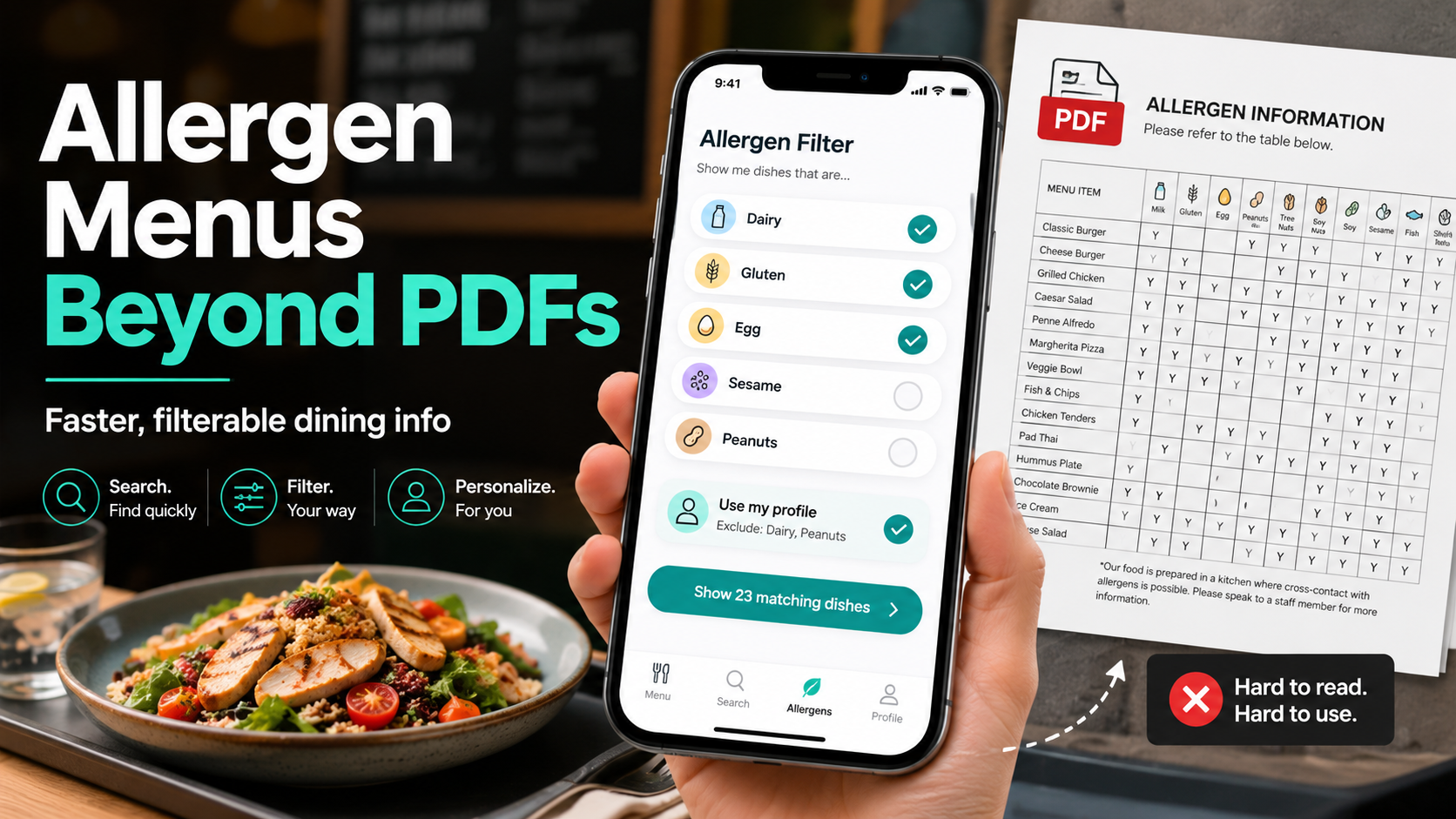
Those questions are specific to lactose. For the broader problem of restaurant labels, preparation information, and cross-contact, see Why “Allergy-Friendly” Menus Can Still Put Diners at Risk and Why Restaurant Allergen Menus Need to Move Beyond PDFs.
If you are managing multiple dietary needs at the same time, lactose intolerance may be only one part of the decision. How to Find Restaurants for Multiple Dietary Restrictions explains why a single restaurant label rarely answers every question.
The Main Point
Lactose intolerance symptoms usually come from undigested lactose reaching the colon. Gas, bloating, abdominal pain, diarrhea, and nausea are common, and symptoms often begin within a few hours of eating or drinking lactose.
But lactose intolerance is not an automatic ban on every dairy product. The amount, product, recipe, and person all matter.
The most important distinction is between lactose intolerance and milk allergy. Digestive symptoms after a large amount of dairy may fit lactose intolerance, while hives, swelling, breathing problems, or other immune symptoms require a different level of caution.
If the pattern is new, severe, persistent, or unclear, speak with a healthcare professional instead of trying to diagnose the cause from a menu or symptom checklist.
Sources and Notes
- NIDDK, Lactose Intolerance
- NIDDK, Eating, Diet, & Nutrition for Lactose Intolerance
- MedlinePlus, Lactose Tolerance Tests
- Mayo Clinic, Lactose Intolerance: Symptoms & Causes
- Health Canada, Milk: A Priority Food Allergen
This article is for general education and is not a diagnosis or personal medical advice. Individual reactions and dietary needs vary.