Where is lactose intolerance most common? Compare populations across Europe, Asia, the Levant, Africa, and the Americas, and learn why dairy consumption alone does not explain the global pattern.
Bloating after drinking milk can be a sign of lactose intolerance, but it is not the only possible explanation. Learn about timing, symptoms, dairy foods, milk allergy, and when to seek medical advice.
Sugar-free, low-carb, keto, and diabetic-friendly appear across restaurant menus, but they do not describe the same kind of meal. What do these labels reveal, and what important details do they leave out?
Shellfish is the most commonly reported convincing food allergy among US adults, but the label combines crustaceans and mollusks into one broad restriction. Research shows why that category can hide important differences.
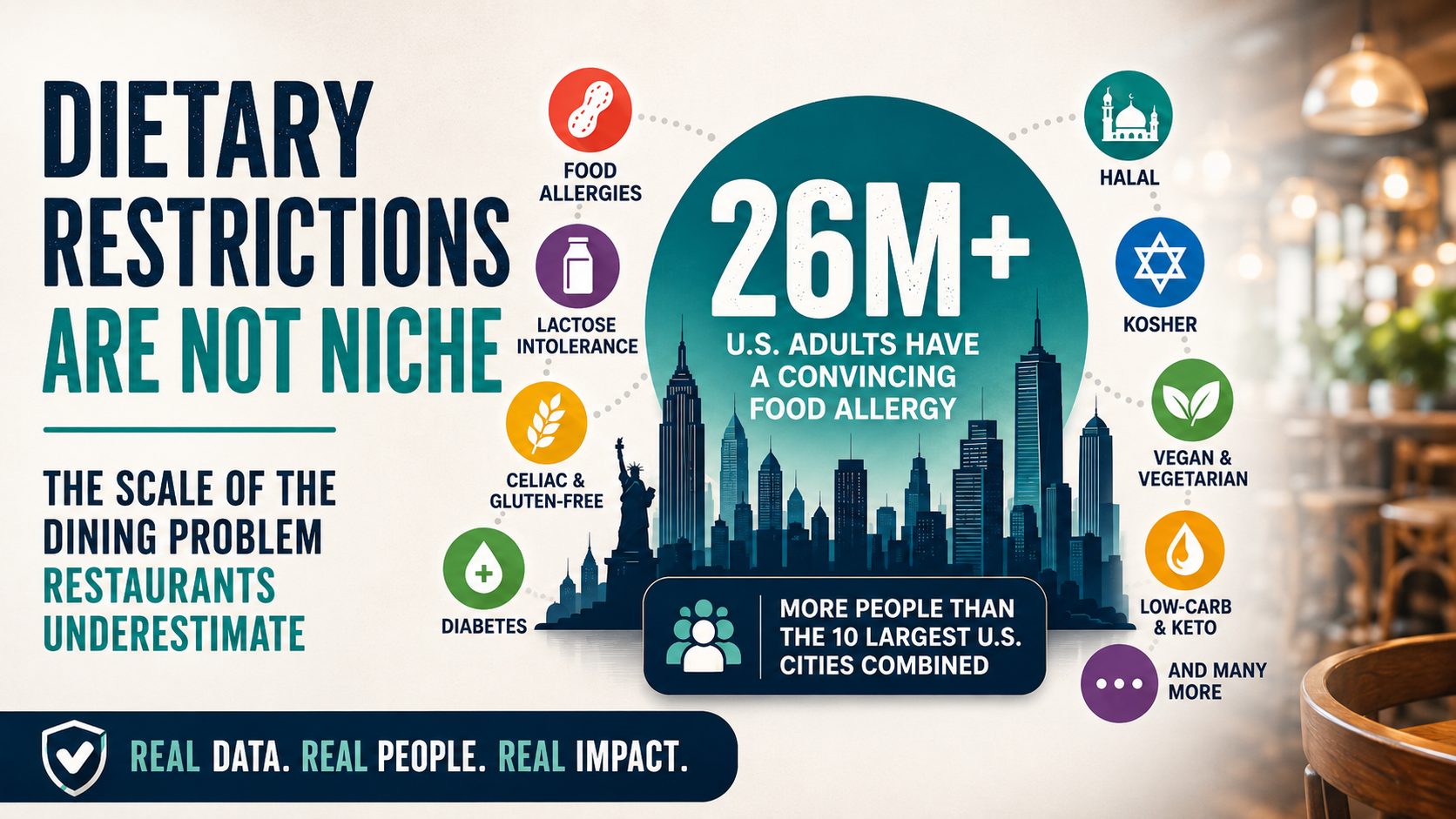
Food allergies, lactose intolerance, celiac disease, diabetes, halal, kosher, vegan, vegetarian, low-carb, and other dietary needs affect millions of diners. The real restaurant challenge is not one restriction at a time. It is scale, stakes, and overlap.
Allergy-friendly labels are only useful when restaurants explain what is excluded and how the food is prepared. Shared fryers, dedicated prep zones, cleaning claims, special requests, and cross-contact can all change whether a menu item is a realistic fit for a diner.